
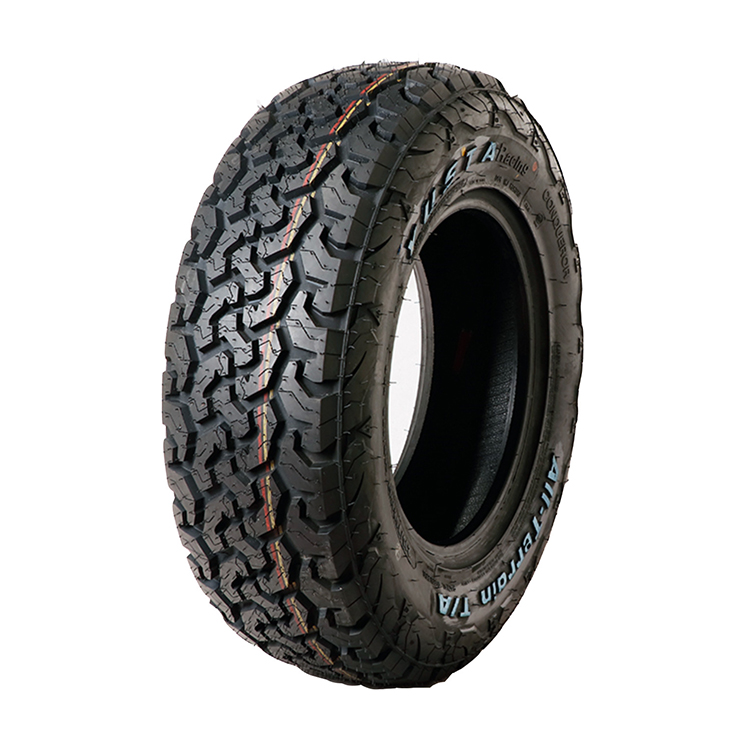
An off-road tires rarely spends its entire working life on one surface. A utility vehicle may leave compact gravel in the morning, cross loose soil at midday, and finish the day on wet grass or broken stone. Because operating conditions change continuously, fleet managers usually compare where the tire will work before deciding which specification enters procurement.
Another phrase that frequently appears in purchasing discussions is off road tyre, particularly when equipment manufacturers prepare different configurations for regional markets.
Construction vehicles.
Agricultural equipment.
Utility carts.
Recreational off-road vehicles.
Each may travel across several ground conditions within only a few hours.
Drivers usually notice steering feel first.
Maintenance teams notice tread condition later.
The same off-road tires can behave differently depending on how often the vehicle moves between firm and loose surfaces rather than remaining on one terrain all day.
Instead of evaluating a tire after one trip, operators compare performance after repeated daily routes.
Loose gravel creates one type of movement.
Soft soil creates another.
Wet ground changes steering response again.
Hard-packed dirt produces a different rolling pattern.
Because of these differences, engineers often begin with terrain analysis before selecting an off road tyre for a fleet.
Purchasing decisions therefore involve the worksite as much as the vehicle itself.
|
Terrain |
Daily Observation |
Typical Maintenance Attention |
|
Gravel roads |
Constant small vibration |
Check tread wear after long routes |
|
Soft soil |
Higher rolling resistance |
Remove packed soil from tread |
|
Wet grass |
Reduced surface stability |
Inspect for trapped debris |
|
Rocky ground |
Frequent impact loading |
Examine sidewall condition |
|
Mixed worksite |
Continuous terrain changes |
Review overall tire condition more often |
Rather than identifying one terrain as "better," maintenance teams use these comparisons to match off-road tires with expected operating environments.
Field observations often appear before inspection reports.
A driver may describe heavier steering.
Another notices additional vibration.
Someone else reports that cleaning takes longer after finishing work.
These comments do not automatically indicate a problem.
Instead, they help technicians decide where to begin checking an off-road tires after returning from the field.
Practical experience often complements routine inspection rather than replacing it.
Service logs are usually concise.
tread cleaned after muddy operation
tire pressure confirmed before next shift
sidewall inspected after rocky route
wheel fastening rechecked
Over time, these short entries become more valuable than a single inspection because they describe how the off road tyre has been used across different working environments.
Two vehicles may have identical mileage.
Their tires may still look different.
One remained on gravel.
The other crossed construction debris every day.
A third alternated between farmland and paved roads.
For maintenance departments, route history frequently becomes part of tire evaluation.
Instead of looking only at operating hours, technicians compare where the vehicle travelled before reviewing the condition of each off-road tires.
As fleet operations become more varied, these everyday route records help explain normal wear patterns and support future purchasing decisions for the next generation of off road tyre products without relying solely on laboratory comparisons.



 Building 1 and 2, No. 2269, Jingzhong Road, Hongjia Street, Taizhou, Zhejiang, China
  +86-18857621312
  info@zinntu.com

 English
 русский
 عربى
عربى
