
Efficiency and Power Control
One of the significant differences between brushless scooter motor controllers and other types of motor controllers is the efficiency and power control they provide. Brushless motor controllers are designed to manage the current flowing into the motor more effectively, resulting in less power loss. This increased efficiency translates into a longer battery life and improved overall performance for electric bikes.
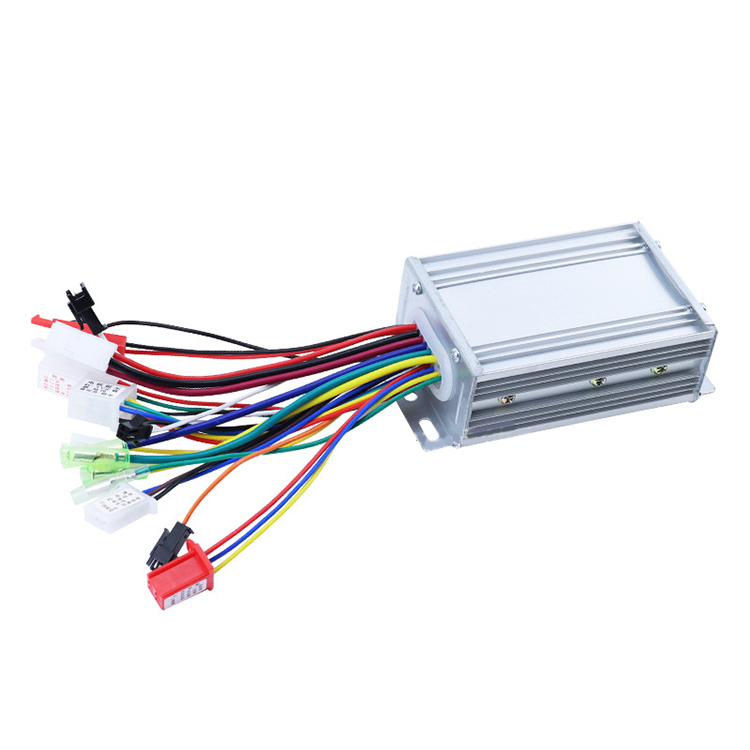
In contrast, brushed motor controllers, which are commonly used in older or less expensive electric vehicles, typically have more power losses due to friction caused by the brushes making contact with the motor's commutator. This reduces the overall efficiency and bring about faster battery depletion. Brushless controllers, on the other hand, use electronic circuits to switch the current, eliminating the need for brushes and reducing energy losses, making them a more efficient choice for e-bikes.
Durability and Maintenance
Brushless scooter motor controllers offer durability compared to their brushed counterparts. Since brushless motors do not have physical brushes that wear out over time, the motor controllers for brushless systems typically require less maintenance and last longer. This is particularly important in the context of electric bikes, where longevity and reliability are crucial for everyday use.
Brushed motor controllers, in comparison, can experience wear and tear on the brushes, which bring about the need for more frequent maintenance or replacement. The brushes can degrade over time, reduced performance and potentially damaging the motor. This makes brushed controllers less durable and more expensive to maintain in the long run.
Power Handling and Performance
Motor controllers for electric vehicles (EVs), whether for e-bikes, electric scooters, or full-sized electric cars, are designed to optimize the power transfer from the battery to the motor. The power handling capabilities of a motor controller are crucial in determining the vehicle's overall performance, speed, and acceleration. Controllers are designed to provide smooth and consistent power to the motor, preventing power surges that could damage the motor or battery.
For electric bikes, brushless motor controllers are particularly effective because they allow for smoother acceleration and deceleration. These controllers can adjust the power output based on the rider's input, providing a more controlled and responsive ride. The increased precision of power delivery improves not only performance but also the rider's safety, making the ride more predictable and manageable.
Integration with Other Systems
Modern motor controllers for electric vehicles are often integrated with other systems, such as regenerative braking, throttle control, and speed regulation. This integration ensures that the vehicle operates efficiently while offering a smoother, more enjoyable user experience. For example, regenerative braking systems work in conjunction with the motor controller to convert kinetic energy back into electrical energy, which is then stored in the battery, improving overall energy efficiency.
In e-bikes, the motor controller communicates with the throttle, brake sensors, and pedal assist systems to provide seamless power output. This integration allows for an intuitive riding experience, where the controller adjusts the motor's response based on the rider's speed, pedaling force, or braking input.
Thermal Management and Safety Features
Effective thermal management is a key feature of motor controllers for electric vehicles. High-powered electric motors generate significant heat during operation, which can cause the motor controller to overheat and potentially fail if not properly managed. Advanced motor controllers, especially those used in e-bikes, include thermal protection systems that monitor the temperature and adjust power output to prevent overheating.
For electric bike motor controllers, the ability to manage heat effectively is particularly important due to the compact size of the controller and the potential for high power output in a small form factor. Many brushless motor controllers include features such as thermal sensors, which automatically shut down the motor or reduce its output when the temperature exceeds safe limits, thereby protecting both the motor and the battery.

 Building 1 and 2, No. 2269, Jingzhong Road, Hongjia Street, Taizhou, Zhejiang, China
  +86-18857621312
  info@zinntu.com

 English
 русский
 عربى
عربى
