
Procurement teams sourcing display components for vehicles and industrial equipment face a recurring challenge: distinguishing a capable LCD screen manufacturer from a supplier that simply assembles panels sourced elsewhere without real production control. As display integration expands into dashboards, control panels, and off-road equipment, buyers increasingly want to understand what happens inside a factory before committing to a purchase order.
Production Capability as a Screening Filter
Sourcing managers who have been burned by inconsistent panel quality now ask pointed questions before shortlisting any LCD screen manufacturer. Does the factory control its own bonding process, or does it outsource that step to a third party with variable quality standards? Panel bonding affects both durability and visual clarity under sunlight, two factors that matter enormously for outdoor equipment applications like marine dashboards and utility vehicle displays. Buyers who skip this question often discover quality gaps only after receiving a full production run.
Custom display manufacturer relationships tend to hold up better over multiple order cycles than one-time transactional purchases, according to buyers managing recurring equipment lines. A factory willing to adjust panel dimensions, brightness calibration, or connector type for a specific vehicle model demonstrates engineering flexibility that generic panel suppliers rarely offer. This distinction matters most for manufacturers building specialized equipment where standard consumer display sizes simply don't fit existing housing designs.
Environmental Durability Testing
Vehicle and marine applications subject displays to conditions far harsher than typical consumer electronics ever face. A reliable LCD screen manufacturer serving this segment runs vibration testing, temperature cycling, and moisture resistance checks as standard practice rather than optional add-ons. Buyers sourcing for outdoor equipment should request test documentation covering operating temperature range, since a panel rated only for indoor consumer use will degrade quickly when installed in equipment exposed to direct sun and temperature swings.
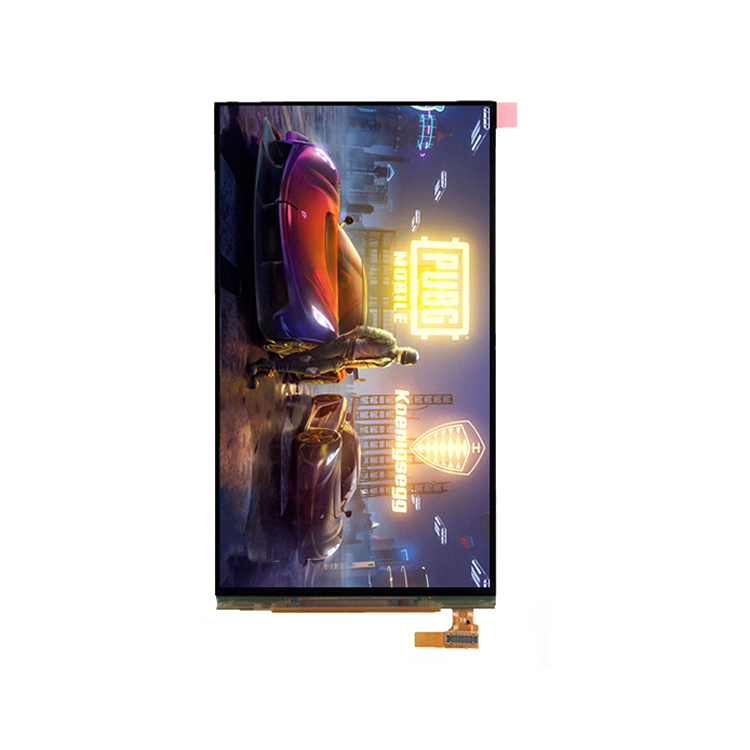
Sunlight readable technology has become a specific request among buyers outfitting off-road and marine vehicles, where standard panel brightness washes out under direct light. Factories offering this capability typically use higher nit ratings alongside anti-glare coatings, adjustments that require deliberate engineering rather than simply selecting a brighter off-the-shelf panel.
Supply Chain Transparency
Component traceability has become a growing concern among buyers managing vehicle production lines with long-term warranty obligations. An established LCD screen manufacturer should provide clear documentation on where driver boards, backlight units, and touch layers originate, since mixed sourcing across multiple sub-suppliers can create inconsistent failure rates across a single production batch. Buyers who request this documentation upfront report fewer surprises during warranty claim periods years into a product's service life.
Minimum order quantities also vary considerably across this supplier category, and buyers developing new equipment lines often need smaller initial runs before committing to full-scale production. Factories willing to accommodate prototype and small batch orders signal a different working relationship than those requiring immediate high volume commitments, which matters for buyers still validating a new vehicle model before scaling up.
Integration Support Beyond the Panel
Display integration involves more than the screen itself. Connector compatibility, mounting bracket dimensions, and driver software all need to align with existing vehicle control systems. A capable LCD screen manufacturer typically offers engineering support during this integration phase rather than shipping a panel and leaving compatibility troubleshooting entirely to the buyer. This support becomes particularly valuable when a display needs to communicate with existing vehicle electronics through a specific protocol.
Buyers working across multiple vehicle platforms sometimes standardize on a single LCD screen manufacturer specifically to simplify this integration work across product lines, even when unit pricing runs slightly higher than switching suppliers for each new model. The reduced engineering overhead across a full product portfolio frequently outweighs marginal per-unit savings from supplier switching.
Long Term Partnership Considerations
Panel technology continues advancing, and buyers locked into rigid single-generation contracts sometimes find themselves unable to upgrade display quality without renegotiating entire supply agreements. Working with an LCD screen manufacturer open to periodic technology reviews allows buyers to incorporate improved brightness, resolution, or touch responsiveness into future production runs without disrupting existing supply relationships.
As vehicle and marine equipment continue integrating more sophisticated display systems, buyers evaluating supplier relationships are placing increasing weight on engineering transparency and testing rigor rather than treating panel sourcing as a straightforward commodity purchase.

 Building 1 and 2, No. 2269, Jingzhong Road, Hongjia Street, Taizhou, Zhejiang, China
  +86-18857621312
  info@zinntu.com

 English
 русский
 عربى
عربى
