
 English
 русский
 عربى
عربى

Industry News
Home / News / Industry News / How Do Rubber Track Chassis Adapt to Agricultural and Industrial Needs?

Rubber track chassis are essential components for unmanned systems' finished products, providing stable and adaptable mobility across diverse environments. These chassis distribute weight evenly, reducing ground pressure and allowing vehicles to navigate soft soil, gravel, or industrial floors without interruption. Their versatility makes them suitable for applications in logistics, agriculture, surveillance, and industrial automation.
The main advantage of a rubber track chassis is its ability to maintain traction and stability on challenging surfaces. Unlike conventional wheels, rubber tracks provide continuous contact with the ground, reducing slippage and enhancing control. For unmanned systems' finished products, this feature ensures consistent performance, even when operating over uneven terrain or in confined spaces.
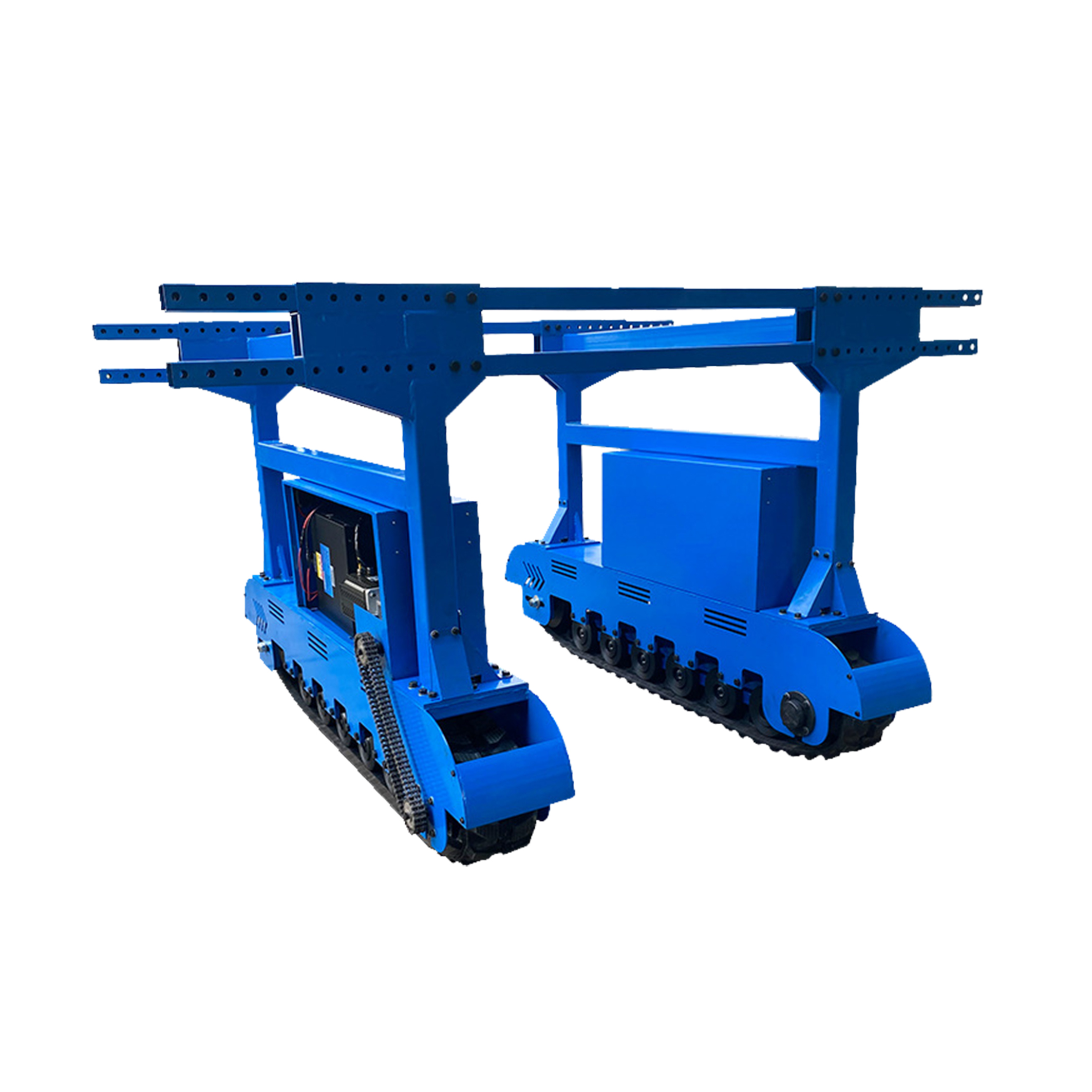
Durable materials contribute significantly to the reliability of a rubber track chassis. Tracks are reinforced with robust fabrics or embedded metal cores to resist wear, while chassis frames typically use high-strength steel or aluminum alloys. A trusted rubber track chassis factory carefully selects materials to balance durability and weight, ensuring long-term performance under heavy operational loads.
Rubber track chassis form the foundation for many unmanned systems. They integrate seamlessly with sensors, power units, and remote-control or autonomous systems, enabling precise navigation and efficient operations. Factories producing these chassis focus on modularity and adaptability, making it easier for clients to incorporate them into different applications without significant redesign.
Customization is a common offering from specialized rubber track chassis factories. Options such as adjustable track lengths, reinforced materials, or specialized attachment compatibility allow the chassis to meet specific operational demands. Whether it's for agricultural machinery moving across muddy fields or industrial robots navigating factory floors, these customizations ensure optimized performance for each use case.
Maintaining a rubber track chassis is straightforward but important for sustained performance. Routine checks involve monitoring track tension, inspecting for wear, and securing fasteners. Factories often provide guidelines and support for preventive maintenance, which reduces operational downtime and maintains the efficiency of the finished products of unmanned systems.
Another benefit of a rubber track chassis is noise and vibration reduction. Rubber inherently absorbs vibrations, protecting onboard electronics and reducing operational noise—a key factor for environments where disturbance needs to be minimized, such as urban logistics or surveillance operations.
Selecting a reliable rubber track chassis factory can have a significant impact on the quality and adaptability of the chassis. Top factories employ precise manufacturing processes, including molding, assembly, and quality inspections, ensuring consistent output. Testing for load capacity, flexibility, and integration compatibility helps factories produce chassis that meet evolving market demands.
For businesses relying on unmanned systems' finished products, partnering with a capable factory assures product reliability, customization options, and long-term support. The combination of material quality, production expertise, and post-sale guidance ensures that rubber track chassis can meet diverse operational challenges efficiently.





 Building 1 and 2, No. 2269, Jingzhong Road, Hongjia Street, Taizhou, Zhejiang, China
  +86-18857621312
  info@zinntu.com