
A Motorcycle Rear Trunk Case answers the daily question of where the helmet goes once the engine is off, and it turns a commuter bike into one that can also carry groceries, a rain jacket and a laptop bag. The case is only half of the story. Where the weight sits inside it, and how that weight sits on the machine behind the seat, decides whether the bike still feels the same on the first corner of the ride home.
A Motorcycle Rear Trunk Case is described in litres, and the volume maps to a few common habits. The sizes below are typical classes, and the exact figure shifts with the shape of each case.
|
Typical size class |
What it usually holds |
Loading note |
|
Small, about 20 to 30 L |
Rain gear, gloves, a lock, daily essentials |
Light items only |
|
Medium, about 30 to 40 L |
One full-face helmet plus a jacket |
Helmet sits in the lower half |
|
Large, about 45 to 50 L |
Two helmets or a weekend bag |
Heaviest items stay low in the case |
A Motorcycle Rear Trunk Case that is larger than the rider's real habit tends to collect extra weight, and extra weight is what changes how the bike behaves. Choosing the class by what the rider carries every day, rather than by the largest option on the shelf, keeps the total inside the bike's rear load figure.
Interior shape matters as much as volume. A case with a flat floor and straight sides holds a helmet and a jacket together, while a tapered case leaves unusable corners. A rider who carries the same two items every day gets more from a well-shaped medium case than from a large one that never fills.
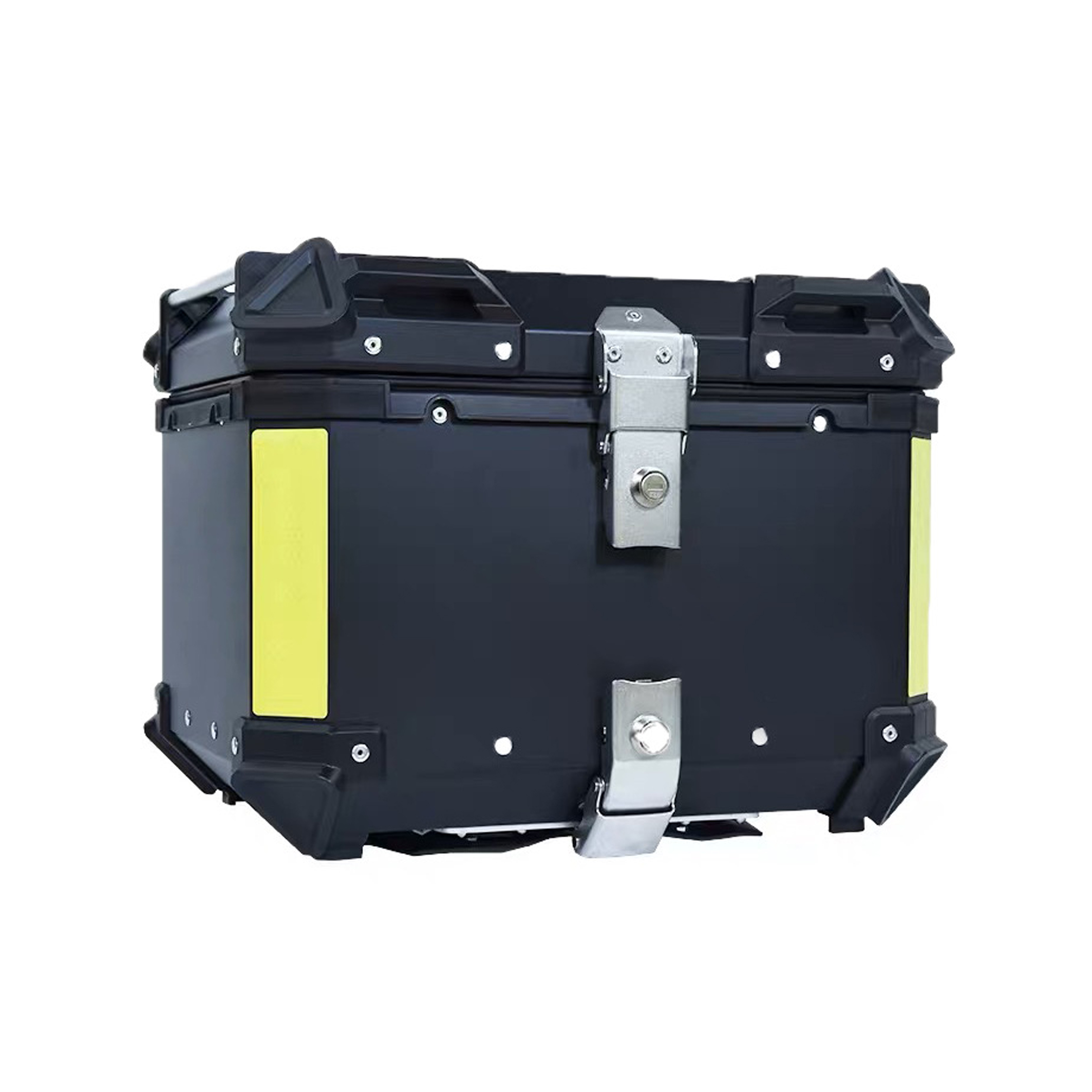
A trunk case rides on a rack behind the seat, so its contents act through a lever. A few kilograms placed 40 cm behind the rear axle take some load off the front wheel, which makes steering feel lighter at speed and makes the bike swing more in slow turns. On a light commuter the effect is easy to notice, and on a larger touring machine it is smaller but still present.
Position on the rack counts as much as the weight itself. Setting a Motorcycle Rear Trunk Case as far forward as the seat and passenger space allow shortens the lever, and centring it across the rack keeps the load from pulling the bike off line.
Motorcycle makers publish a maximum rear load, and the rack, the case and everything inside all count toward it. A Motorcycle Rear Trunk Case that stays within that figure leaves the handling close to what the rider already knows.
Four habits keep a loaded case from changing the ride:
Following this order means a loaded Motorcycle Rear Trunk Case behaves like a small, steady extension of the seat rather than a swinging weight.
A Motorcycle Rear Trunk Case sits on a platform that carries both the case and its contents, so the frame beneath it sets the limit on what the case can hold. Zinntu makes both parts, and its accessory category lists a Motorcycle Rear Luggage Rack next to a Motorcycle Rear Trunk Luggage Case. The rack is described as a metal frame in stainless steel, aluminum or carbon steel, with tie-down points, side rails and a rear mounting platform for hard cases or top boxes, and its racks are made to fit specific motorcycle models using existing mounting points on the bike.
A Motorcycle Rear Trunk Case on its matching Rear Luggage Rack leaves the rider with one source to ask about fit, and the Rear Trunk Luggage Case and rack together give one set of limits to follow.


 Building 1 and 2, No. 2269, Jingzhong Road, Hongjia Street, Taizhou, Zhejiang, China
 +86-18857621312
 info@zinntu.com


 English
 русский
 عربى

