
Vehicle accessory catalogues often include several rearview mirror models that look similar but differ in mounting hardware, stem geometry, housing dimensions, or adjustment mechanisms. For vehicle manufacturers and aftermarket distributors, these differences affect product identification, purchasing records, and replacement-part compatibility.
The Large Rear View Mirror category illustrates this challenge because mirror size alone does not identify a complete assembly. Two models may have comparable reflective surfaces but require different mounting points or vehicle connections. Clear product classification helps businesses distinguish these variations before they enter production schedules or distribution inventories.
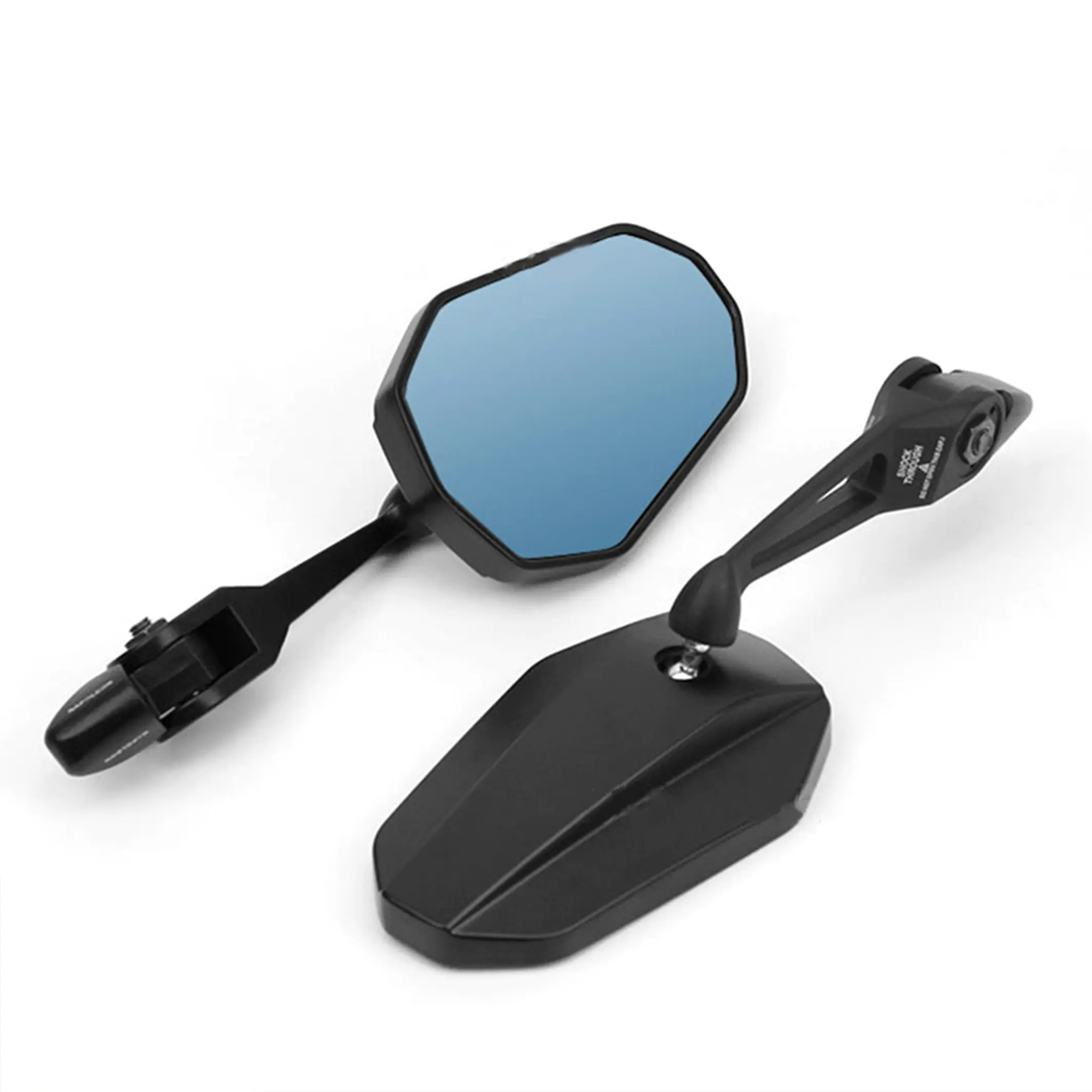
Rearview mirror ranges may include handlebar-mounted mirrors, handlebar-end mirrors, universal motorcycle mirrors, and mirrors intended for off-road vehicles. Their external appearance can overlap, but their mounting structures are not necessarily interchangeable.
A product record for a Large Rear View Mirror should identify the mounting method and relevant connection dimensions wherever these details are available. Thread size, mounting direction, stem length, and bracket configuration can distinguish models that otherwise appear similar in photographs.
For OEM projects, the vehicle manufacturer may provide drawings or interface requirements. Aftermarket distributors may instead work from existing part numbers, sample components, or vehicle application records. In either case, a clear distinction between appearance and physical compatibility reduces ambiguity during product matching.
Distributors frequently manage several mirror styles across different vehicle categories. Without a consistent classification system, similar products can acquire overlapping descriptions, making it difficult to distinguish one SKU from another.
A Large Rear View Mirror listing can be organized around identifiable attributes such as mirror shape, housing material, mounting type, stem configuration, and intended vehicle category. Not every attribute needs to appear in the product title, but the underlying product record should retain the information needed to distinguish variants.
|
Catalogue Attribute |
Information to Record |
Relevance to B2B Supply |
|
Mounting type |
Handlebar, handlebar-end, or bracket mount |
Identifies the connection method |
|
Connection details |
Thread or interface dimensions, where specified |
Supports compatibility checks |
|
Assembly geometry |
Stem length, angle, and housing dimensions |
Distinguishes similar-looking models |
|
Reflective surface |
Shape and flat or convex configuration |
Identifies the mirror format |
|
Product version |
Part number and revision |
Helps maintain repeat-order consistency |
This structure is particularly useful when a distributor sources multiple mirror models from one manufacturer or maintains replacement parts for several vehicle platforms.
Photographs are useful for identifying general appearance, but they rarely show every dimension or connection detail. A technical drawing can record the mounting interface, overall dimensions, adjustment range, and other model-specific features.
For a Large Rear View Mirror, an approved sample can also serve as a reference when a drawing does not fully communicate the assembled shape or movement of the joint. Any confirmed differences between the sample and the drawing should be resolved before the specification becomes the reference for repeat orders.
This process matters when buyers add a new model to an existing catalogue. Clear records help purchasing teams compare the proposed item with similar products already in stock without assuming that shared appearance guarantees compatibility.
A broad mirror range can create inventory complexity when several models have similar names but different connections. Stock records that identify only a general product category may not provide enough information for accurate picking, replenishment, or replacement-part identification.
A Large Rear View Mirror SKU should therefore connect the product name with its model code, approved specification, and relevant application information. Where left- and right-side versions differ, or where mounting hardware is supplied separately, the distinction should appear in the item record.
For distributors, this approach supports more consistent catalogue updates and makes historical purchasing information easier to interpret. It also helps prevent a revised model from being confused with an earlier version during repeat purchasing.
Mirror assemblies contain several connected parts, including the reflective element, housing, stem, joint, and mounting hardware. A change to one component can affect product identification even if the overall appearance remains similar.
If a manufacturer revises a mounting thread, housing dimension, or included bracket, the product record should identify the affected version. Buyers can then distinguish existing stock from newly supplied items and update application information where necessary.
For a Large Rear View Mirror, version control is relevant to both original-equipment projects and aftermarket distribution. Consistent part numbers and revision records give both parties a shared reference when discussing changes to a product range.
Taizhou Zinntu Intelligent Technology Co., Ltd. lists several rearview mirror categories, including universal motorcycle mirrors, aluminum alloy mirrors, and off-road vehicle mirrors. Such variety makes accurate model identification relevant when customers handle multiple product types within one purchasing programme.
A Large Rear View Mirror should be described through verified product attributes rather than a broad category name alone. Consistent drawings, mounting details, part numbers, and revision records help manufacturers and distributors maintain clearer product data across quotations, orders, and repeat supply.
As vehicle accessory ranges expand, catalogue accuracy becomes part of routine product management. For B2B buyers, reliable model-level information helps connect a physical mirror assembly with the correct purchasing record, application, and replacement reference.



 Building 1 and 2, No. 2269, Jingzhong Road, Hongjia Street, Taizhou, Zhejiang, China
 +86-18857621312
 info@zinntu.com


 English
 русский
 عربى

