
A Motor Controller For Electric Vehicles has to work within the battery's limits while delivering the power required by the motor. It also receives commands from the vehicle and reports operating conditions to its control system. It connects the battery pack, motor and vehicle electronics through voltage, current, feedback and communication settings.
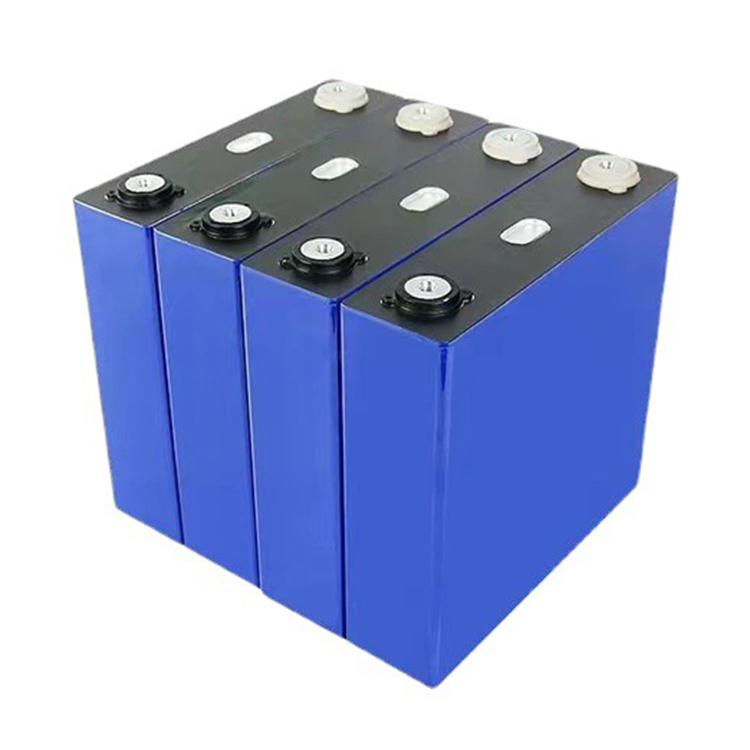
The input range of a Motor Controller For Electric Vehicles must cover the battery's voltage throughout its charge cycle, from the fully charged level to the discharge cut-off.
A 13-cell series pack using ternary lithium cells, for example, can reach approximately 54.6 V when fully charged and fall toward 39 V near the discharge cut-off. The controller needs to accommodate both ends of this range, with suitable margin for voltage fluctuations during acceleration and sudden load changes.
The battery-current setting of a Motor Controller For Electric Vehicles must also stay within the pack's permitted discharge level, including the limits of its cells, wiring and protection components. A higher setting is not automatically suitable if the battery cannot safely supply the required current.
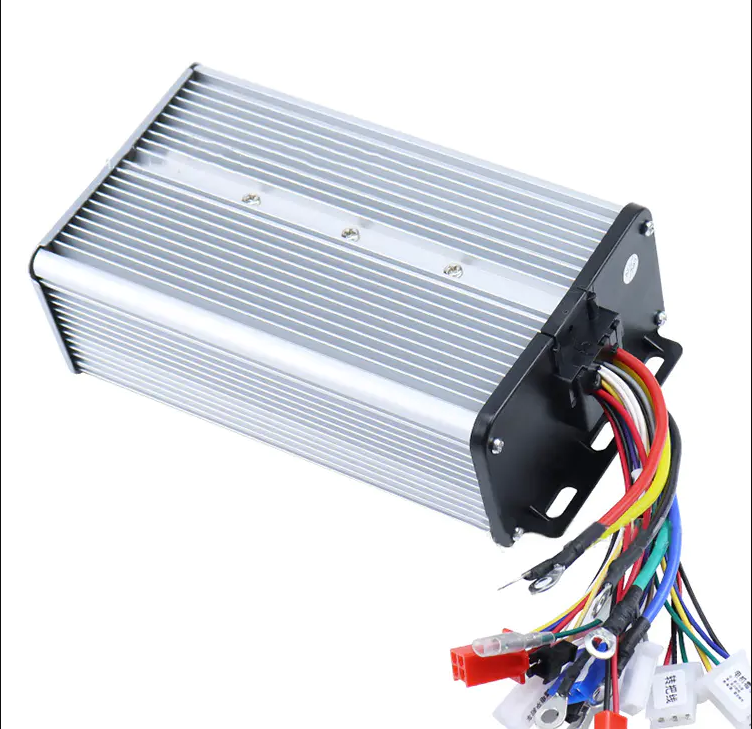
A Motor Controller For Electric Vehicles draws DC current from the battery and switches it through the motor's three phases to produce torque. Battery current and motor phase current describe different parts of this process. Under PWM control, phase current can be higher than battery current, particularly at low duty cycles.
For example, at a 50 percent duty cycle, a simplified relationship gives approximately 40 A of phase current for 20 A drawn from the battery. Actual values depend on controller topology, operating conditions and measurement method. Battery current and phase current should therefore not be treated as interchangeable ratings.
Continuous current is the level the controller can sustain under specified thermal conditions; peak current is available only for a limited period, such as during acceleration or climbing.
Motor feedback needs equal attention. A brushless motor with Hall sensors requires compatible sensor inputs and correct signal configuration, including the relevant pole information. Sensorless control estimates rotor position from electrical signals and can behave differently at very low speeds. Changing the motor or sensing method may therefore require a corresponding configuration change in the Motor Controller For Electric Vehicles.
The vehicle's electronic architecture determines how a Motor Controller For Electric Vehicles receives commands and returns operating data. In a light utility vehicle, the throttle signal may be analog. More complex vehicles and unmanned platforms may use a digital network such as CAN to exchange commands and status information.
Returned data can include battery voltage, motor current, temperature and fault codes. Zinntu also lists real-time battery-level, speed and temperature data, together with remote fleet monitoring functions that can support maintenance planning.
A documented interface helps the software team integrate an electric vehicle controller by defining message formats, signals and fault information.
Vehicles using the same Motor Controller For Electric Vehicles hardware may still need different operating behavior. A heavy utility vehicle may require gradual acceleration and a lower speed limit, while a lighter platform may use a more responsive setting. These differences can often be handled through controller parameters rather than a separate hardware platform.
Profiles commonly include battery- and phase-current limits, acceleration and deceleration ramps, and maximum speed. Settings should reflect vehicle weight, motor characteristics, battery capacity and operating environment.
Zinntu's controller information includes custom settings for different vehicle requirements and remote firmware updates. In an OEM program, these functions can support configuration for different platform versions and software updates after deployment. Adjustment methods depend on the controller's firmware and communication capabilities.
Battery, motor and controller selection is more effective when treated as one engineering task. The battery must supply the required voltage and current, the motor must suit the controller's electrical and sensing capabilities, and the vehicle electronics must support the communication interface. Mismatches can affect output and system stability.
Zinntu places its electric vehicle controllers in its electrical system range alongside related batteries and motors. For an OEM project, selecting a Motor Controller For Electric Vehicles means checking the complete power and control arrangement rather than evaluating the controller alone. Confirming electrical ratings, motor feedback requirements and communication protocols before production helps establish a workable configuration for each vehicle platform.

 Building 1 and 2, No. 2269, Jingzhong Road, Hongjia Street, Taizhou, Zhejiang, China
 +86-18857621312
 info@zinntu.com


 English
 русский
 عربى

