
Many people don't think about blind spots until one almost causes a crash. You change lanes, check the mirror, and somehow a car just appears next to you. That happens because standard mirrors leave gaps. They were built to meet basic rules, not to give you a full picture.
That's why more drivers are looking for an angle view rear view mirror that actually widens what you can see without making everything look weird or far away.
The real question isn't whether you need one. It's the type that works for the way you drive.
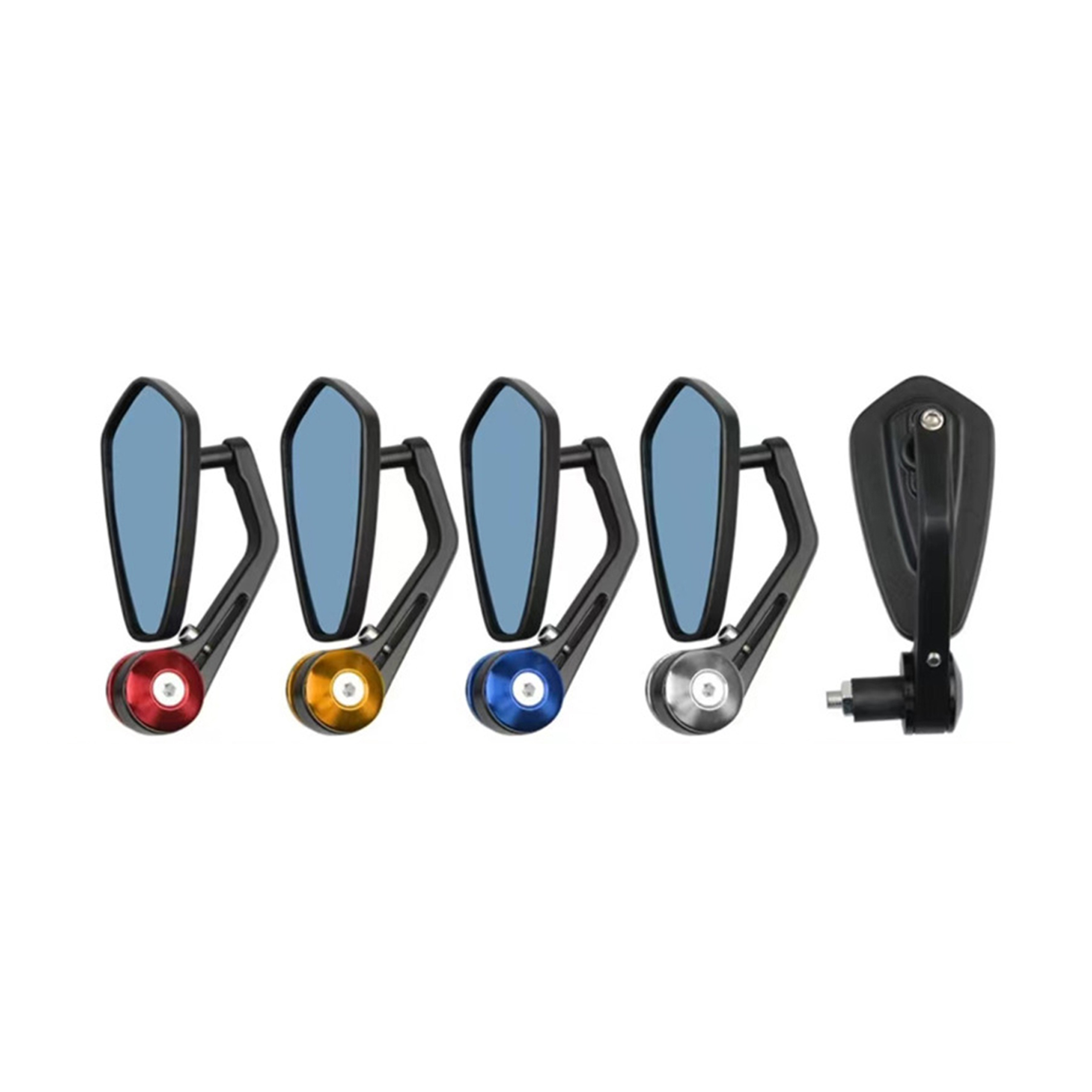
A flat mirror shows you exactly what's behind you. Distance looks real. But you lose a lot on the sides. A curved mirror shows more road, but cars can look smaller or farther than they really are.
A good angle view rear view mirror tries to split the difference. You want fewer blind spots, but you also need to trust how close the car next to you actually is.
A solid-angle view rear-view mirror can help you:
Each type feels different the first time you use it. Some feel normal right away. Others take a day or two to get used to.
|
Mirror Type |
Viewing Angle |
Distance Accuracy |
Distortion |
Best For |
|
Flat Mirror |
Narrow |
Very Accurate |
Almost None |
Small cars, short trips |
|
Dual-Curvature Mirror |
Wide |
Good |
Slight on edges |
SUVs, daily driving |
|
Multi-Curvature Mirror |
Very Wide |
Less Accurate |
Noticeable |
Trucks, vans, towing, RVs |
Flat mirrors are honest. What you see is what you get. But that honesty comes with a cost. A motorcycle can disappear into your blind spot faster than you expect.
A dual-curvature angle view rear-view mirror adds a curved outer section. That small change lets you see the next lane without twisting your neck. Most daily drivers find this the easiest upgrade to live with.
Multi-curvature mirrors are for people who drive big things. Delivery vans. Campers. Pickups towing a boat. The view is almost too wide at first. But once you adapt, you realize how much you weren't seeing before.
Single-curvature means one smooth curve across the whole mirror. Simple. Predictable. Good for someone who just wants a little more side view without any funny business.
Dual curvature has a clear line. The inside part shows a normal distance. The outside edge stretches to catch what would otherwise be a blind spot. It's the best middle ground for most people.
Multi-curvature changes shape gradually. No visible line. Just a very wide picture. Trucks and RVs benefit the most here.
Here's what each one actually does for you:
Picking the right angle view rear view mirror comes down to what you drive and where. City drivers often want max width. Highway cruisers usually prefer accurate depth.
Installation matters more than most people think.
|
Installation Method |
Good For |
Watch Out For |
|
Clip-On |
Quick swap, temporary use |
Can vibrate loose over time |
|
Adhesive |
Permanent fit, rough roads |
Hard to move once stuck |
Adhesive-mounted angle view rear view mirror products stay put. Heat, cold, bumpy roads – they hold. Commercial drivers almost always go this route.
A loose or poorly fitted mirror is worse than no mirror at all.
To get it right:
Some oversized mirrors block factory blind spot lights or stop the mirror from folding in. Check that first.
Small city cars don't need a huge towing mirror. Big trucks do.
Good rule of thumb:
More drivers are realizing that factory mirrors are just the legal minimum. A well-chosen angle view rear view mirror won't just help you see more. It'll make long drives feel less tiring and tight parking spots feel less like a gamble.

 Building 1 and 2, No. 2269, Jingzhong Road, Hongjia Street, Taizhou, Zhejiang, China
  +86-18857621312
  info@zinntu.com

 English
 русский
 عربى
عربى
