
Walk through a factory, warehouse, farm, or even a shopping center, and chances are an electric motor is working somewhere nearby. Sometimes it drives a conveyor. Sometimes it powers a cooling fan, a pump, or an automated vehicle. Because electric motors are often hidden inside larger systems, people tend to notice the machine rather than the component making it move.
This widespread use raises an interesting question: how did the electric motor become such a common part of modern equipment?
A Technology That Adapted To Different Industries
One reason for the popularity of the electric motor is its ability to fit into very different applications.
The same basic principle can be found in products that look completely unrelated. A small inspection robot, an industrial pump, an automated warehouse vehicle, and a production machine may all rely on an electric motor, even though their operating environments are very different.
Because of this flexibility, an electric motor manufacturer often develops products for multiple industries rather than serving only one market segment.
The Shift From Mechanical Power Systems
Historically, many machines relied on mechanical transmission systems powered by centralized equipment. As electrical infrastructure became more widely available, individual machines gradually gained their own drive systems.
This change altered equipment design in many industries. Instead of transferring power across long mechanical linkages, manufacturers could place an electric motor directly where movement was needed.
The result was not simply a different power source. It also changed how machines were designed, maintained, and integrated into production environments.
Why Control Matters As Much As Power
When discussing motors, people often focus on output power. In practice, control can be just as important.
Modern systems frequently require:
An electric motor can be integrated with controllers and sensors to support these requirements. In many applications, the ability to adjust movement precisely is valued just as much as the ability to generate force.
This is one reason why an electric motor manufacturer may invest heavily in control technology alongside motor development.
Different Applications Create Different Requirements
Not every motor is expected to perform the same task.
A warehouse transport vehicle may prioritize continuous operation. Agricultural equipment may focus on torque. Industrial automation systems may place greater importance on positioning accuracy.
Because of these differences, an electric motor manufacturer often works with a wide range of specifications rather than producing a single universal design.
What performs well in one environment may not be the preferred option in another.
Energy Use Is Part Of The Discussion
As industries look more closely at operational costs, energy consumption has become a common consideration.
The discussion is not limited to how much electricity a machine uses during operation. Buyers may also evaluate duty cycles, system efficiency, and long-term operating patterns.
An electric motor operating continuously in a manufacturing facility faces different expectations from one used intermittently in mobile equipment.
For this reason, purchasing decisions are often based on the complete application rather than motor specifications alone.
Manufacturing Has Changed Alongside Demand
The motors used today are not identical to those produced decades ago. Materials, production methods, and control systems have evolved alongside industry requirements.
A modern electric motor manufacturer may work with advanced machining processes, digital testing systems, and application-specific development programs. These changes are often driven by customer requirements rather than technology trends alone.
As industries become more specialized, motor designs frequently become more specialized as well.
Looking Beyond The Component Itself
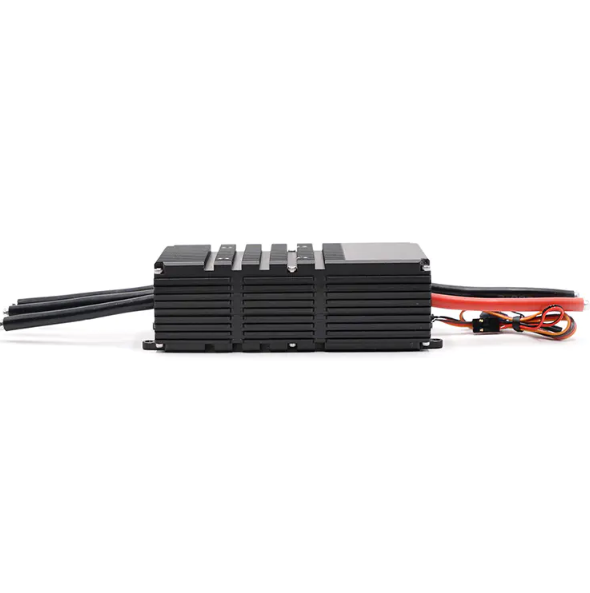
It is easy to think of a motor as a standalone product. In reality, an electric motor usually functions as part of a larger system.
The surrounding gearbox, controller, battery, drive electronics, and mechanical structure all influence how the motor performs. A well-matched system often delivers better results than simply selecting a larger motor.
This is why engineers rarely evaluate motors in isolation when designing equipment.
A Practical Reason For Their Popularity
The continued growth of the electric motor is not tied to a single industry or a single trend. Instead, it comes from the ability to adapt to many different tasks.
From automated factories to mobile equipment and unmanned platforms, the role of the electric motor continues to expand because it can be integrated into systems that require different levels of power, control, and flexibility.
For many equipment manufacturers, the question is no longer whether to use a motor, but which type is the right fit for the job at hand. That ongoing demand continues to shape the work of every electric motor manufacturer serving modern industrial markets.

 Building 1 and 2, No. 2269, Jingzhong Road, Hongjia Street, Taizhou, Zhejiang, China
  +86-18857621312
  info@zinntu.com

 English
 русский
 عربى
عربى
