
A few years ago, many entry-level electric scooters were equipped with 250W or 350W motors. As riding expectations changed, manufacturers gradually began offering more powerful configurations. Today, the 36v 800w brushless motor appears in a wide range of commuter scooters, delivery vehicles, and recreational models.
Interestingly, this popularity is not simply about having more power. The position that the 36v 800w brushless motor occupies in the market sits somewhere between lightweight urban scooters and higher-output performance machines. That balance is one reason it continues to appear in so many product catalogs.
Why 36V Became So Common
When buyers compare electric scooters, voltage is usually one of the first specifications they notice. Yet in practice, voltage alone does not determine how a scooter feels on the road.
For many years, 36V systems have been used as a middle-ground solution. They sit above smaller 24V platforms while remaining less demanding than larger 48V or 60V systems.
Common voltage ranges seen in electric scooters today include:
Because of its position in the middle of this range, the 36v 800w brushless motor is often chosen for products that need a balance between battery size, vehicle weight, and everyday usability.
Where 800W Fits In The Market
Motor wattage tells only part of the story, but it does help explain how a scooter is positioned.
A 250W scooter may be suitable for relatively flat routes. A 500W system can offer stronger acceleration. Once manufacturers move into the 800W range, the vehicle is often expected to handle more varied riding conditions.
This is where the 36v 800w brushless motor has found a place. It provides additional climbing capability and acceleration compared with smaller systems, without moving into the category where larger batteries and heavier frames become necessary.
For many scooter manufacturers, that trade-off remains attractive.
Not Every Rider Needs 48V
It is easy to assume that higher voltage always means a better riding experience. In reality, the intended use matters far more.
Someone commuting short distances through city streets may not require the same system used for long-distance travel or higher-speed operation.
In these situations, a 36v 800w brushless motor can provide enough performance for everyday riding while helping keep overall vehicle weight under control.
This is one reason many manufacturers continue to offer both 36V and 48V models rather than replacing one with the other.
Brushless Design Changed Expectations
Years ago, brushed motors were still common in many small electric vehicles. Over time, brushless designs became increasingly widespread.
A 36v 800w brushless motor uses electronic control rather than physical brushes making repeated contact inside the motor. As a result, internal wear is reduced compared with traditional brushed designs.
For scooter manufacturers, this allows the motor to support frequent daily operation without requiring the same maintenance approach associated with older technologies.
The change happened gradually, but today brushless systems are what many riders expect to see in modern scooters.
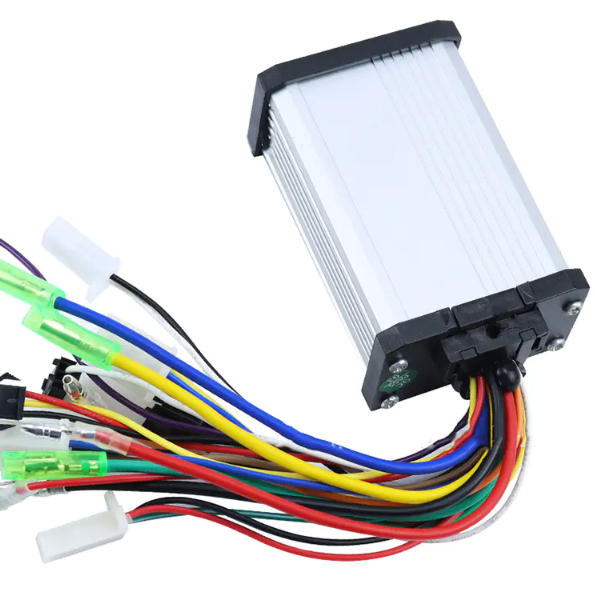
The Motor Is Only Part Of The Story
Two scooters may use the same 36v 800w brushless motor and still feel surprisingly different during operation.
The reason is that the motor works alongside other components.
Factors that influence real-world performance include:
A scooter designed for urban commuting may behave very differently from one intended for warehouse transport or recreational riding, even if the motor specification appears identical on paper.
Why This Configuration Continues To Appear
The continued presence of the 36v 800w brushless motor is less about chasing the highest numbers and more about finding a practical balance.
Manufacturers are often trying to satisfy several requirements at the same time: reasonable range, manageable vehicle weight, acceptable climbing performance, and everyday usability. The 36v 800w brushless motor happens to sit in a part of the market where those requirements often overlap.
In many purchasing discussions, buyers do not start with voltage or wattage. They start with what the scooter needs to do each day. Once that answer becomes clear, the choice between 36V, 48V, or larger systems usually becomes much easier. The fact that the 36v 800w brushless motor continues to appear across so many models suggests that it still matches the needs of a large group of users.

 Building 1 and 2, No. 2269, Jingzhong Road, Hongjia Street, Taizhou, Zhejiang, China
  +86-18857621312
  info@zinntu.com

 English
 русский
 عربى
عربى
