
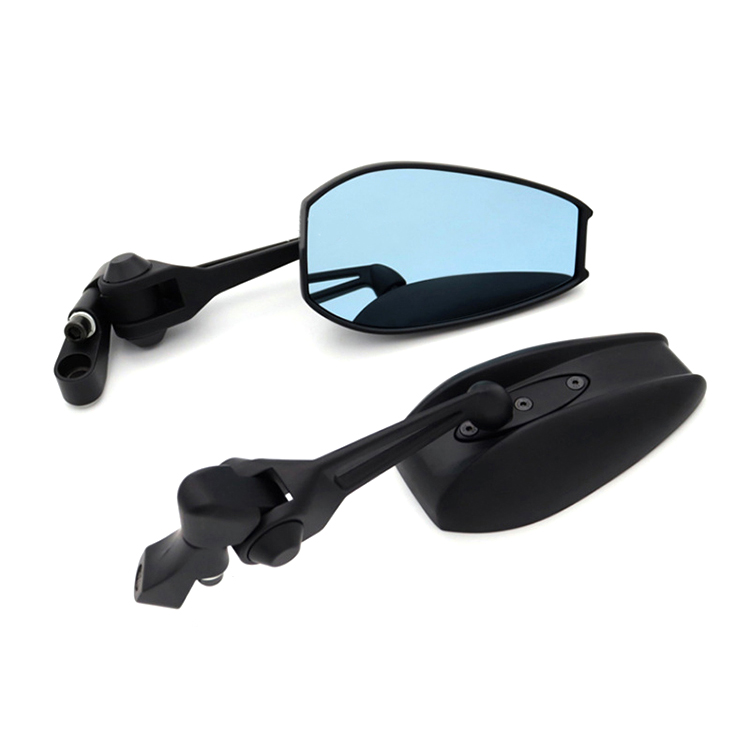
Large rear view mirror designs are appearing more frequently on utility vehicles, agricultural equipment, off-road machines, and specialized commercial vehicles. While cameras and digital displays continue to develop, many operators still request a larger reflective view when ordering new equipment or replacing existing mirrors.
Instead of treating this as a design trend, fleet managers and equipment manufacturers are beginning to view it as a practical response to changing working environments.
The Driving Environment Has Changed
Many vehicles today operate in places that are very different from traditional highways.
These environments involve constant movement around workers, equipment, and temporary obstacles.
Under these conditions, a large rear view mirror provides a wider visual reference without requiring drivers to depend entirely on electronic systems.
The goal is not to replace technology but to reduce blind spots during everyday operation.
Operators Often Notice Visibility Before Specifications
When drivers describe a mirror after several weeks of use, they rarely mention its dimensions first.
Instead, they talk about what they can see.
Some mention that reversing feels less stressful.
Others notice they no longer need to lean forward as often when checking the side of a trailer or attachment.
These observations explain why a large rear view mirror is often appreciated through daily experience rather than through measurements on a product sheet.
Equipment Around The Vehicle Is Also Getting Larger
Modern work vehicles frequently carry additional equipment.
These additions can partially block the driver's normal field of view.
Rather than changing the driving position, manufacturers sometimes increase the viewing area provided by a large rear view mirror to compensate for the extra equipment installed on the vehicle.
The mirror becomes part of the overall visibility strategy instead of an isolated accessory.
More Visibility Does Not Always Mean More Information
Experienced operators point out that a wider mirror is only useful if the reflected image remains easy to interpret.
An oversized viewing area with excessive vibration or poor positioning may create new challenges.
For this reason, discussions about large rear view mirror design increasingly include mounting stability, viewing angle, and adjustment range rather than mirror size alone.
The objective is usable visibility, not simply a larger reflective surface.
Replacement Decisions Often Come From Daily Experience
In many fleets, mirrors are not upgraded because of new regulations.
They are replaced after drivers repeatedly report similar experiences.
Small comments begin to appear.
"It is difficult to see the attachment."
"I lose sight of pedestrians when turning."
"The old mirror feels too limited."
When similar feedback is collected over time, managers often consider installing a large rear view mirror during routine maintenance rather than waiting for a complete vehicle replacement.
Visibility Is Becoming Part Of Productivity
For operators working long hours, every unnecessary movement inside the cab adds up.
Turning the body repeatedly.
Leaning forward.
Adjusting posture to check surrounding areas.
Reducing these small actions can make routine driving feel smoother over an entire workday.
That is one reason why large rear view mirror solutions continue to appear across different types of industrial and commercial vehicles.
The discussion is gradually moving away from mirror size alone and toward how visibility supports safer and more efficient daily operation in real working environments.



 Building 1 and 2, No. 2269, Jingzhong Road, Hongjia Street, Taizhou, Zhejiang, China
  +86-18857621312
  info@zinntu.com

 English
 русский
 عربى
عربى
