
Vehicle lighting systems have evolved significantly from the simple oil lamps of early automobiles to the sophisticated optical assemblies found on modern cars. These systems must fulfill multiple functions: providing adequate illumination for night driving, signaling intentions to other drivers, and maintaining reliable operation across wide temperature ranges and exposure to weather, road debris, and chemicals.
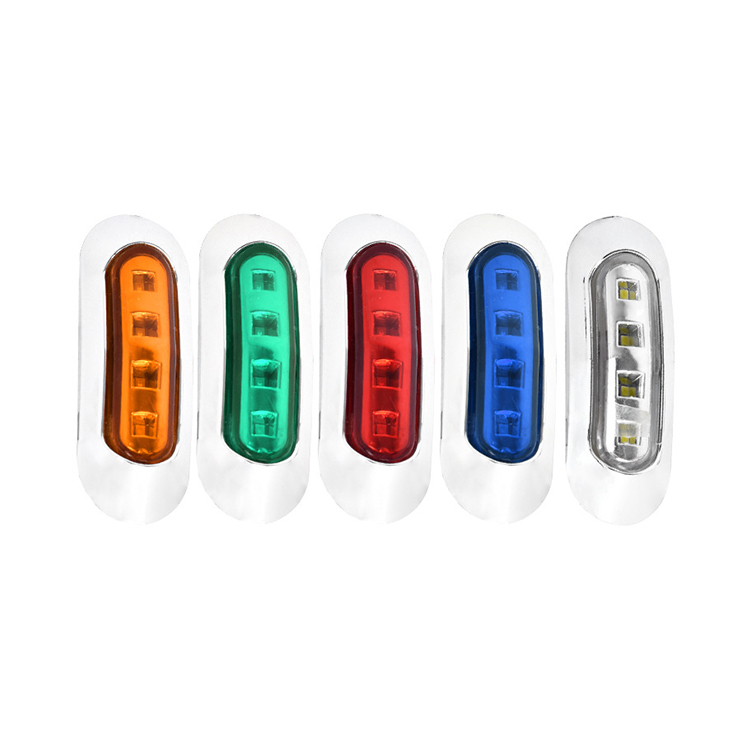
Lens and Housing Materials: The Optical Interface
The outer components of vehicle lights—the lens that transmits light and the housing that contains the assembly—must balance optical clarity with durability and environmental resistance.
Polycarbonate (PC): This engineering plastic has become the dominant material for automotive lighting lenses over the past several decades.
Polycarbonate offers exceptional impact resistance, approximately 200 times greater than glass. This is critical for headlamps that can be struck by road debris.
The material has high optical clarity, with light transmission up to 90 percent, allowing efficient light output from the bulbs or LEDs.
PC can be molded into complex aerodynamic shapes that would be impossible or prohibitively expensive with glass. This allows designers to integrate lighting seamlessly with vehicle styling.
However, polycarbonate is susceptible to UV degradation and yellowing when exposed to sunlight. To address this, lenses receive a hard coating that provides UV protection and scratch resistance.
The material has a continuous use temperature range of approximately -40°C to 120°C, sufficient for automotive applications but requiring careful design near high-intensity light sources.
Acrylic (PMMA - Polymethyl Methacrylate): Some lighting applications, particularly for rear lamps and interior lights, use acrylic.
PMMA offers optical clarity, actually higher than polycarbonate, with light transmission around 92 percent.
It has better inherent UV resistance than uncoated polycarbonate and does not yellow as readily.
However, acrylic is more brittle and has lower impact resistance than polycarbonate, making it unsuitable for front-facing applications where stone impact is likely.
It is often used for lenses that are protected behind grilles or for decorative lighting elements.
Glass: While largely replaced by plastics for automotive lighting, glass still appears in some applications.
Glass offers optical clarity, scratch resistance, and UV stability. It does not yellow or degrade over time.
It can withstand higher temperatures than plastics, making it suitable for high-intensity lighting applications.
However, glass is heavy, brittle, and cannot be molded into complex shapes easily. It is also more expensive to produce in the compound curves required for modern vehicle styling.
Some premium or vintage-style vehicles use glass lenses for aesthetic reasons, and some auxiliary lights (off-road, work lights) use glass for durability.
Housing Materials: The rear housing that contains the light assembly and mounts to the vehicle requires different properties than the lens.
Polypropylene (PP) is commonly used for housings, often with glass fiber reinforcement for increased strength and dimensional stability.
ABS (Acrylonitrile Butadiene Styrene) is also used, offering good impact resistance and moldability.
Polyamide (Nylon) with glass fiber reinforcement is used for housings requiring higher temperature resistance, particularly those close to engine compartments or high-intensity light sources.
Steel housings appear in some heavy-duty or commercial vehicle applications where durability is required, though they add weight and cost.
Reflector and Bezel Materials: Directing the Light
Internal components that shape and direct the light beam require materials with specific reflective properties and dimensional stability.
Reflector Substrates: The base material for reflectors must maintain precise shape under temperature variations.
BMC (Bulk Molding Compound) and SMC (Sheet Molding Compound) are thermoset polyester materials commonly used for reflector substrates. They offer dimensional stability, heat resistance, and low thermal expansion.
High-temperature polycarbonate is used for some reflectors, particularly in applications where complex molding is required.
Polyamide with mineral or glass filling appears in some designs, offering good heat resistance and moldability.
Zinc die-cast reflectors are used in some premium or high-temperature applications, providing dimensional stability and heat dissipation.
Reflective Coatings: The substrate must be coated with a highly reflective material.
Aluminum is the common reflective coating, applied through vacuum metallization. A thin layer of aluminum (approximately 0.1 micrometers) is deposited on the substrate, providing reflectivity of approximately 85-90 percent.
Silver coatings offer higher reflectivity (up to 95 percent) but are more expensive and more susceptible to oxidation. They are used in some premium applications where light output is required.
Protective coatings: The reflective layer is typically overcoated with a transparent protective layer to prevent oxidation and mechanical damage. Silicon dioxide or other clear materials are used for this purpose.
Bezels and Trim Rings: Decorative components surrounding the light may use various materials.
ABS or polycarbonate with chrome-like finishes are common. These may be vacuum metallized or coated with simulated chrome finishes.
Stainless steel or aluminum trim rings appear in some premium vehicles for a more upscale appearance.
Chrome-plated brass or zinc is used in some applications where a true chrome finish is desired, though this adds weight and cost.
Light Source Materials: Generating the Illumination
The light sources themselves incorporate specialized materials selected for their ability to generate light efficiently and withstand operating conditions.
Tungsten Filaments: Traditional incandescent bulbs use tungsten filaments.
Tungsten has the higher melting point of any metal (3422°C), allowing it to be heated to incandescence without melting.
The filament is typically coiled and sometimes coiled again (coiled-coil) to increase surface area and light output.
Tungsten slowly evaporates during operation, eventually bring about filament failure. Halogen gas fills slow this process by redepositing tungsten on the filament.
Halogen Gas Fill: Halogen bulbs contain halogen gases (iodine or bromine) mixed with inert gas.
The halogen cycle returns evaporated tungsten to the filament, extending bulb life and allowing higher operating temperatures for increased light output.
The bulb envelope must be quartz or hard glass capable of withstanding the high temperatures and pressures.
HID (High-Intensity Discharge) Materials: Xenon HID lamps use an arc between electrodes rather than a filament.
The bulb contains xenon gas for instant light and metal halide salts (sodium, scandium) that vaporize and produce light when the arc strikes.
Electrodes are typically tungsten with thorium or other emissive materials to facilitate arc initiation.
The arc tube is made from quartz or ceramic (polycrystalline alumina) capable of withstanding the temperatures and pressures.
LED (Light Emitting Diode) Materials: LEDs have become dominant in modern automotive lighting.
The semiconductor chip is typically gallium nitride (GaN) or indium gallium nitride (InGaN) mounted on a substrate.
Different semiconductor materials produce different colors. Aluminum gallium indium phosphide (AlGaInP) is used for red and amber LEDs.
The chip is encapsulated in epoxy or silicone lens material that protects the semiconductor and shapes the light output.
Phosphor coatings convert blue LED light to white. These phosphors are typically cerium-doped yttrium aluminum garnet (YAG) or similar materials.
The LED package includes a lead frame (typically copper alloy) and thermal management features to conduct heat away from the chip.
Laser Diode Materials: Some premium headlamps now use laser light sources.
Gallium nitride laser diodes produce blue light that is directed through a phosphor converter to produce white light.
The brightness allows very compact optical designs.
Lens Coatings and Surface Treatments
The optical surfaces of vehicle lights receive various treatments to enhance performance and durability.
Hard Coatings: Polycarbonate lenses require protective coatings.
Silicone hard coats are commonly applied by dipping or flow coating. They provide abrasion resistance and UV protection.
Acrylate-based coatings cured by UV light offer similar protection and can be applied more efficiently in some manufacturing processes.
Coating thickness is typically 3-10 micrometers, sufficient for protection without affecting optical properties.
Anti-Fog Coatings: Some interior lighting surfaces may receive treatments to prevent condensation.
Hydrophilic coatings cause moisture to spread into a thin, even layer rather than forming discrete fog droplets.
These are more common in instrument cluster lenses than exterior lights.
Anti-Reflective Coatings: Occasionally used on interior surfaces or behind lenses to reduce internal reflections.
Thin-film multilayer coatings similar to those used in camera lenses can be applied, though cost limits their use in automotive applications.
Sealing and Gasket Materials
Vehicle lights must remain sealed against moisture, dust, and pressure changes throughout their service life.
Gasket Materials:
EPDM (Ethylene Propylene Diene Monomer) rubber is commonly used for lens-to-housing gaskets. It offers weather resistance, flexibility, and compression set resistance.
Silicone rubber provides temperature resistance and flexibility but is more expensive. It is used in applications near high-temperature sources.
Butyl rubber is used for some adhesive sealing applications, particularly for bonding lenses to housings permanently.
Closed-cell foam gaskets (polyurethane or polyethylene) provide good sealing with lower cost, used in some applications.
Adhesives:
Hot-melt adhesives (polyamide or polyolefin based) are commonly used for lens-to-housing bonding. They provide good adhesion to both polycarbonate and filled polypropylene.
Silicone adhesives offer flexibility and temperature resistance but require longer cure times.
Reactive polyurethane adhesives provide very strong bonds and are used in some premium applications.
Breather Membranes: Many lights include vents with breathable membranes to equalize pressure while excluding moisture.
Expanded PTFE (ePTFE) membranes allow air passage while blocking liquid water. These are the common type.
Polyurethane or polyester membranes are used in some applications, offering lower cost with slightly different performance characteristics.
Wiring and Connector Materials
The electrical system connecting the light to the vehicle must be reliable and resistant to the underhood and underbody environment.
Wire Insulation: Wires within the light assembly must withstand temperature.
Cross-linked polyethylene (XLPE) offers good temperature resistance and durability.
Polypropylene insulation is used in less demanding applications.
Silicone insulation provides the temperature resistance for wires near light sources.
Connector Housings:
PBT (Polybutylene Terephthalate) is the common connector housing material. It offers good electrical insulation, dimensional stability, and resistance to automotive fluids.
PA66 (Nylon 66) with glass reinforcement is used for connectors requiring higher strength or temperature resistance.
Connector terminals are typically tin-plated copper or copper alloy (brass or phosphor bronze). Gold plating may be used for critical connections.
Sealing at Connectors:
Silicone or EPDM wire seals prevent moisture entry at the point where wires enter the connector.
Interface seals between mating connectors use similar elastomers to create a watertight connection.
Thermal Management Materials
Modern lighting, particularly LED systems, generates heat that must be managed to maintain performance and longevity.
Heat Sinks:
Aluminum is the common heat sink material. Extruded or die-cast aluminum fins provide increased surface area for heat dissipation.
Copper offers better thermal conductivity but higher weight and cost. It may be used in limited areas where space is constrained.
Thermally conductive plastics are emerging for some applications. These polymers are filled with ceramic or other conductive materials to improve heat transfer while maintaining the design freedom and weight advantages of plastic.
Thermal Interface Materials:
Thermal greases or phase-change materials fill microscopic air gaps between the LED and heat sink, improving heat transfer.
Thermally conductive pads (silicone or acrylic with ceramic fillers) provide both heat transfer and electrical isolation where needed.
Thermal adhesives bond components while conducting heat.
Advanced Materials and Future Trends
The vehicle lighting market continues to evolve with new materials and technologies.
Polycarbonate with Integrated Functions: New grades of polycarbonate incorporate UV protection throughout the material rather than relying solely on coatings. This provides more durable protection against yellowing.
Smart Materials: Research continues into materials that could enable new lighting functions:
Electrochromic materials that change transparency or color with applied voltage.
OLEDs (Organic Light Emitting Diodes) for thin, uniform light panels, already appearing in some taillights.
Quantum dot materials for precise color control and efficiency improvements.
Recycled and Sustainable Materials: Manufacturers are increasingly incorporating recycled plastics into non-optical components and exploring bio-based polymers for some applications.
Improved Coatings: Development continues on harder, more durable coatings for polycarbonate lenses and more efficient reflective coatings for optics.

 Building 1 and 2, No. 2269, Jingzhong Road, Hongjia Street, Taizhou, Zhejiang, China
  +86-18857621312
  info@zinntu.com

 English
 русский
 عربى
عربى
