
 English
 русский
 عربى
عربى

Industry News
Home / News / Industry News / Motorcycle Rear Luggage Rack Supports The Expanding Role Of Two-Wheel Utility

Motorcycles are increasingly used for more than commuting. Delivery work, weekend touring, outdoor trips, and everyday errands all require riders to carry different types of equipment. This change in usage is creating more demand for practical accessory systems, and the Motorcycle Rear Luggage Rack has become an important platform for expanding the carrying function of a motorcycle.
A rear rack may look like a relatively small metal accessory, but its position gives it a useful role in the motorcycle's overall storage system. Mounted behind the seat, it can provide a base for soft luggage, backpacks, tool bags, camping equipment, or a rear top case.
This makes the Motorcycle Rear Luggage Rack different from a storage box itself. The rack does not determine what type of luggage has to be used. Instead, it provides a structural platform that can accommodate different carrying solutions according to the riding application.
For daily commuting, a rider may use a small bag. A touring motorcycle may require a larger case, while an outdoor trip can involve sleeping bags or other irregularly shaped equipment. One rack can therefore support several types of cargo arrangements.
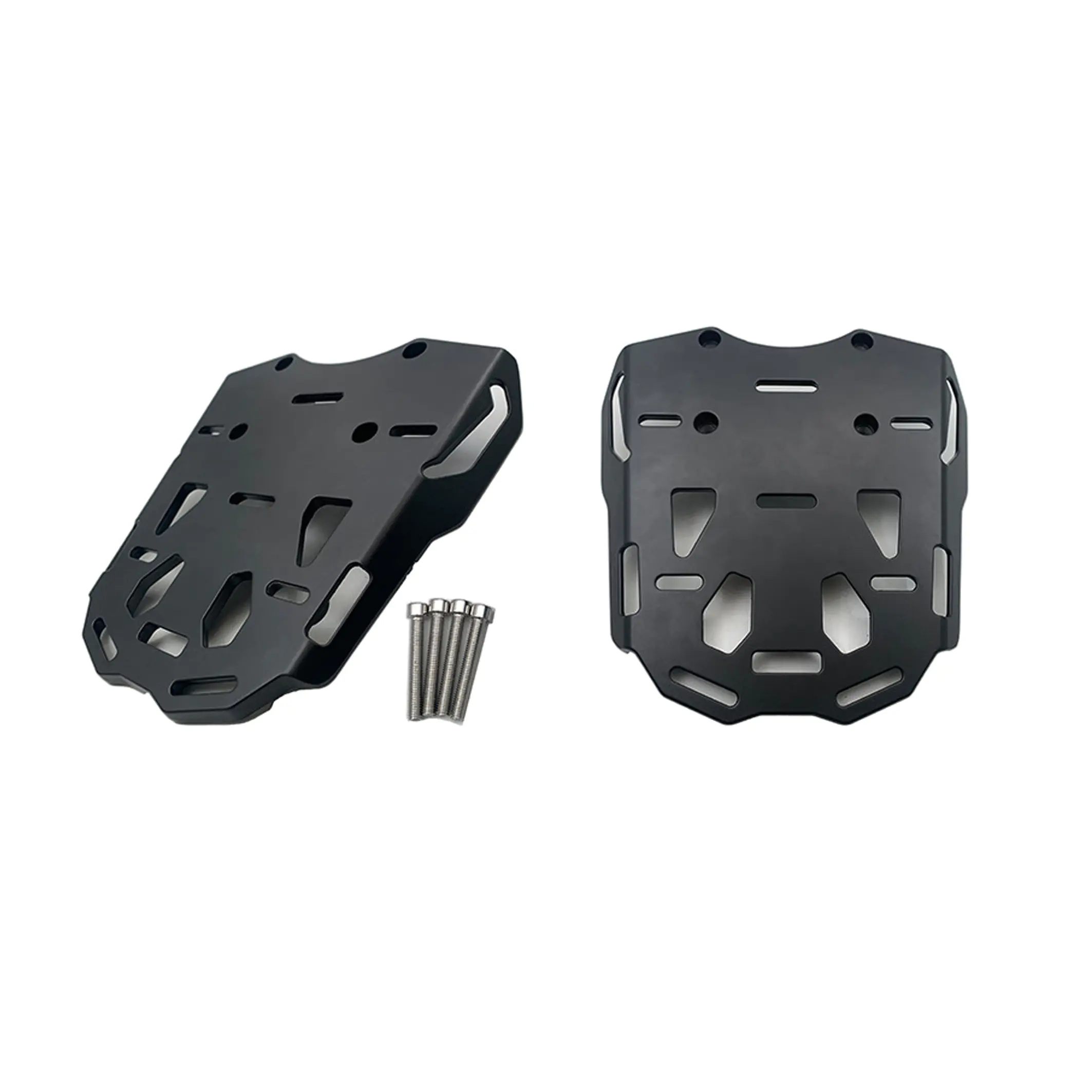
Long-distance motorcycle travel has helped increase interest in modular luggage systems. Riders often need more storage than the motorcycle's original bodywork provides, but they may not want one permanent storage configuration.
A rear rack creates another mounting area without changing the basic role of the motorcycle. Soft luggage can be secured with straps or cords, while compatible mounting points can support larger storage systems.
The Motorcycle Rear Luggage Rack therefore sits between the motorcycle and the luggage. Its design has to provide enough usable surface while keeping the accessory visually and physically integrated with the rear section of the vehicle.
Not all loads have the same shape. A hard case has a defined mounting footprint, while a duffel bag or camping bag may need a larger open platform and several tie-down positions.
This is why rear racks can vary in platform shape, mounting holes, side supports, and attachment points. Some designs emphasize a broad flat surface, while others use tubular structures or additional rails around the cargo area.
For a Motorcycle Rear Luggage Rack, these details affect how easily different types of luggage can be positioned and secured.
A well-planned accessory system can also make it easier for riders to change between everyday and touring configurations without replacing the motorcycle itself.
Although rear racks are accessories, they still need to correspond with the motorcycle's rear structure. The mounting area, seat position, rear lighting, and surrounding bodywork can all influence the available space.
Model-specific designs can follow existing mounting locations and maintain a cleaner relationship with the motorcycle's original structure. Universal solutions may offer broader application possibilities but can require additional consideration during installation.
For manufacturers, this creates a balance between producing a rack for a specific motorcycle model and developing a platform that can serve several related applications.
The Motorcycle Rear Luggage Rack is therefore becoming part of a wider accessory ecosystem rather than functioning as an isolated metal frame.
As motorcycle models change, accessory manufacturers also need to keep track of differences in rear body dimensions and mounting structures. A rack that fits one generation may not automatically suit another.
Taizhou Zinntu Intelligent Technology Co., Ltd. produces rear luggage racks and other motorcycle accessories as part of its accessory system. Its manufacturing facilities include CNC machining, metalworking, injection molding, and inspection capabilities, supporting the production of vehicle-related components.
This type of manufacturing setup is relevant when accessory components require different processing methods across a product range. The company also describes customized parts and services for different market requirements.
The development of motorcycle luggage systems reflects a broader change in how two-wheel vehicles are being used. Commuting, delivery, recreation, and touring can place very different demands on the same motorcycle.
A Motorcycle Rear Luggage Rack provides a relatively simple way to respond to those changing requirements. It can support soft luggage for short trips, larger cases for touring, or additional equipment for outdoor activities without changing the motorcycle's basic structure.
As motorcycle accessories continue moving toward more flexible configurations, the rear rack is likely to remain a practical connection point between the vehicle and the growing range of cargo solutions available to riders. For manufacturers, that creates demand for racks that combine vehicle compatibility, usable mounting space, and consistent production across different motorcycle applications.





 Building 1 and 2, No. 2269, Jingzhong Road, Hongjia Street, Taizhou, Zhejiang, China
  +86-18857621312
  info@zinntu.com