
An off-road vehicle is not supported by its tires alone. The tire works together with the wheel rim, suspension, drivetrain, and vehicle weight to keep the vehicle moving across uneven ground. For manufacturers developing Off-Road Tires, the relationship between the tire and the rest of the vehicle can be just as important as the tread pattern visible from the outside.
Tire dimensions have to correspond with the vehicle they are installed on. Diameter, width, load requirements, and wheel compatibility all affect how the finished vehicle behaves.
A tire that is too large can change available clearance around the suspension and bodywork. A narrower or smaller tire can create a different contact area with the ground. These differences become more noticeable when a vehicle is designed for outdoor use, where the surface may not remain flat or consistent.
Zinntu's product range includes car tires, mud terrain tires, and Off-Road Tires as part of its structural system for recreational and utility vehicles. The company's product portfolio also includes wheels and rims, creating a broader relationship between tire and wheel components.
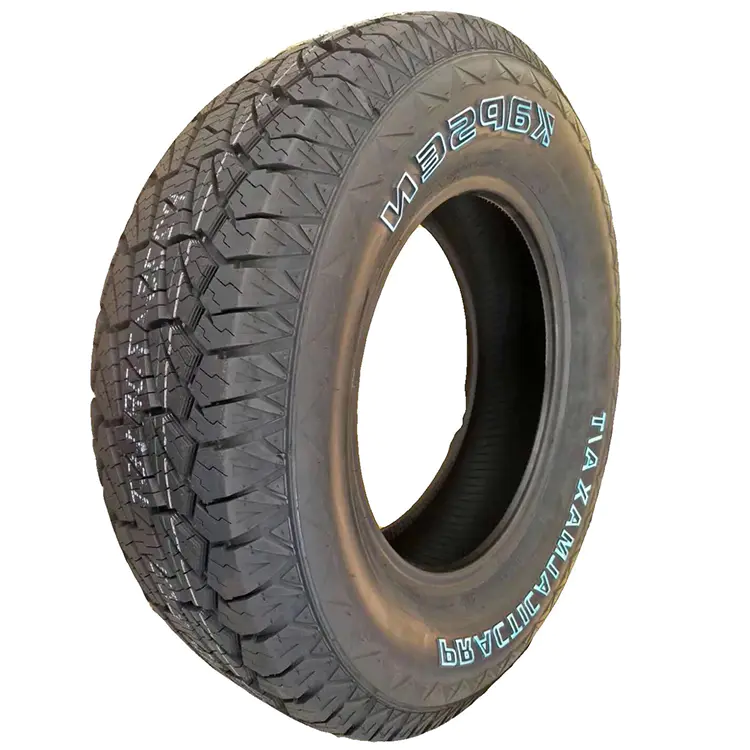
A tire cannot be evaluated independently from its rim. The two components have to correspond in size and mounting structure before the wheel assembly can be installed on a vehicle.
For off-road vehicles, the wheel assembly also influences the available ground clearance and the position of the tire relative to the suspension. Changes to one component can therefore affect surrounding vehicle parts.
This is particularly relevant for Off-Road Tires used on UTVs, ATVs, patrol vehicles, and other recreational or utility platforms. Zinntu's product range covers both off-road tires and aluminum alloy off-road forged wheels, reflecting the role of these components within the same structural system.
A lightweight recreational vehicle and a utility vehicle do not place identical demands on their tires. The weight carried by the vehicle changes the load applied to each wheel, while passengers, equipment, and cargo can further alter the distribution.
This is one reason tire specifications need to be considered alongside the vehicle's operating conditions. A tire selected for a lightweight recreational platform may not be appropriate for a heavier utility application simply because the dimensions appear similar.
For Off-Road Tires, manufacturers therefore need to consider the relationship between tire construction and the vehicle's expected load rather than treating tire size as the only specification.
The development of electric recreational and utility vehicles is creating another factor in tire selection. Electric drive systems can deliver high torque directly through the motor, while the battery contributes considerable vehicle weight.
Zinntu focuses on electric drive platforms and supplies components including motors, controllers, batteries, wheels, and tires. Its product information describes vehicle systems designed for different operating conditions, including off-road environments.
For an electric vehicle, the tire becomes part of a larger power-delivery system. The contact between the tread and ground affects how the available drive force is transferred, while the tire also has to support the weight of the complete vehicle.
Off-road tires are often discussed in terms of grip, but contact with the ground also influences vehicle stability. Uneven surfaces can change how much of the tread is carrying load at a particular moment.
A wider tire can create a larger contact area, while a specialized tread can provide additional edges for loose surfaces. Zinntu highlights wide tire designs for certain beach applications, where a larger contact area can help reduce sinking in sand.
The same principle shows why Off-Road Tires cannot be separated from the vehicle and terrain for which they are developed.
For a component supplier, tire production is only one part of the overall vehicle component business. Zinntu operates CNC machining, injection molding, metalworking, and inspection facilities, while its product portfolio covers structural, electrical, and accessory systems.
This broader manufacturing capability is relevant when a vehicle project involves several connected components rather than a standalone replacement tire.
Inspection equipment listed by the company includes three-coordinate measurement, three-dimensional scanning, and hardness testing, supporting dimensional and material checks across manufactured parts.
For Off-Road Tires, the final specification is connected with the vehicle platform, wheel dimensions, operating load, and drive system. Looking at the tire as one part of the complete vehicle structure gives manufacturers a clearer view of how the component needs to perform once it is mounted and put into service.


 Building 1 and 2, No. 2269, Jingzhong Road, Hongjia Street, Taizhou, Zhejiang, China
  +86-18857621312
  info@zinntu.com

 English
 русский
 عربى
عربى
