
Design and Structure
An outboard propeller is a rotating component attached to the lower unit of an outboard motor, responsible for converting engine power into thrust to propel a boat through water. The propeller is usually made of materials such as aluminum, stainless steel, or composite alloys, chosen for strength, corrosion resistance, and durability.
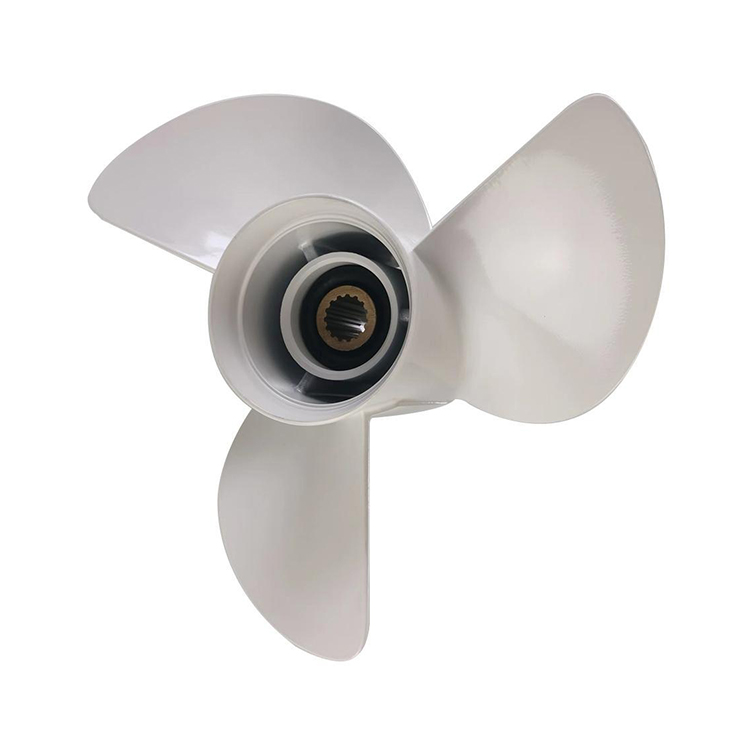
The typical design includes a hub and multiple blades. The hub connects to the propeller shaft, transmitting torque from the engine to the blades. Blades are angled to push water backward, creating forward motion according to Newton’s third law of motion. Blade number, pitch, and diameter vary depending on the application, boat size, and desired performance.
Some propellers include features such as skewed blades, cupped edges, or variable pitch, which help improve efficiency, reduce cavitation, and optimize thrust in different operating conditions. Proper selection of size, pitch, and material is essential to match engine performance and watercraft requirements.
Operational Function
The primary function of an outboard propeller is to provide thrust that moves a boat through water. As the engine rotates the propeller shaft, the blades push water backward, producing forward propulsion. Reversing the rotation or using a reverse gear changes the direction of thrust, allowing the boat to move backward or maneuver.
Propellers also affect boat handling and stability. Blade design and pitch influence acceleration, top speed, and fuel efficiency. Smaller diameter or lower pitch propellers provide greater acceleration and load-carrying capability, while larger diameter or higher pitch propellers support higher top speeds. By converting rotational energy from the engine into controlled motion in water, the propeller ensures smooth and responsive boat operation.
Applications in Marine Use
Outboard propellers are widely used in recreational and commercial marine applications. Recreational boating, such as fishing, water sports, and cruising, relies on propellers to provide sufficient thrust and handling. Correct propeller selection helps maintain performance, fuel efficiency, and comfort during operation.
Commercial vessels, including small transport boats, water taxis, and workboats, use outboard propellers to move heavy loads or maintain steady operation in variable water conditions. Propellers can also be found on racing boats, where blade material and pitch are optimized for speed and responsiveness.
In addition, specialized propellers are used for shallow-water operation or amphibious watercraft. Blade design adjustments prevent grounding, reduce drag, and maintain efficient thrust even in challenging environments.
Maintenance and Performance Considerations
Proper maintenance of an outboard propeller is essential to ensure consistent performance and safety. Regular inspection for nicks, cracks, or bent blades helps prevent vibration, reduced thrust, or damage to the engine. Minor damage can often be repaired, while severe deformation may require replacement.
Cleaning is also important to remove aquatic growth, debris, or corrosion that can affect performance. Lubricating the hub and ensuring proper alignment of the propeller shaft reduce wear and mechanical stress.
Performance can be influenced by blade selection, engine speed, and water conditions. Matching the propeller’s pitch, diameter, and material to the boat’s intended use ensures acceleration, fuel efficiency, and maneuverability. Adjustments may be necessary when operating in different water conditions or changing load requirements.
An outboard propeller is a critical component in marine propulsion systems, converting engine power into thrust and supporting boat movement. From its structural design and operational function to practical applications and maintenance, the propeller plays a central role in boat performance. Proper selection, installation, and care help achieve efficient, safe, and reliable operation across recreational, commercial, and specialized marine environments. Understanding these aspects allows operators to optimize performance, fuel efficiency, and handling while ensuring the longevity of the propeller and outboard motor.

 Building 1 and 2, No. 2269, Jingzhong Road, Hongjia Street, Taizhou, Zhejiang, China
  +86-18857621312
  info@zinntu.com

 English
 русский
 عربى
عربى
