
The advantages are centered on ground pressure distribution, traction, and surface protection. The significant advantage is low ground pressure. The large contact area of the rubber track distributes the vehicle's weight over a greater surface area than tires. This reduces soil compaction in agricultural fields, minimizes rutting on soft or sensitive terrain like lawns or turf, and allows operation on surfaces where wheeled vehicles would sink, such as mud, sand, or snow.
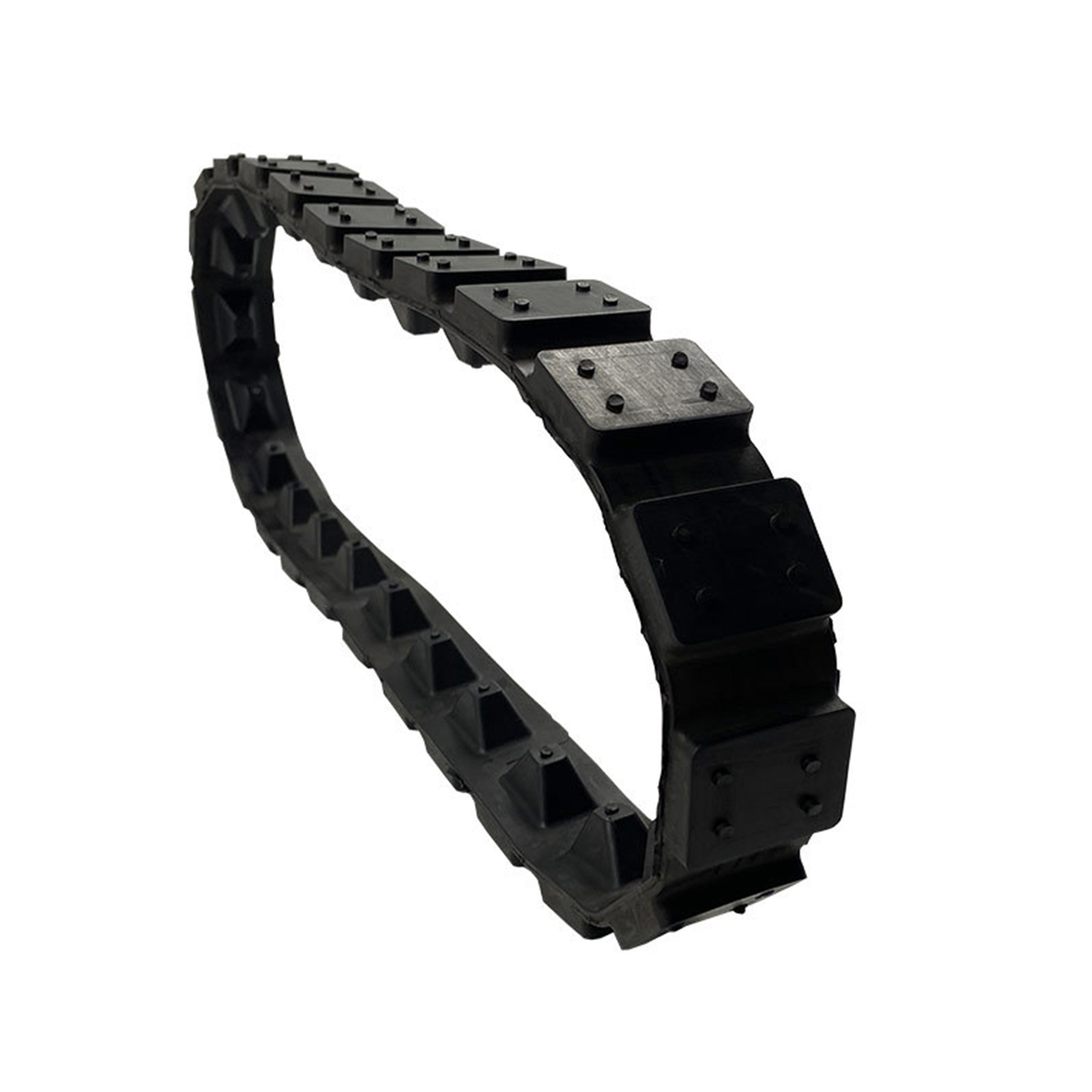
A second advantage is enhanced traction and flotation. The continuous track provides consistent grip across its entire length, reducing slippage compared to wheels on loose or slippery surfaces. The flotation effect from the low ground pressure helps keep the vehicle on top of the substrate rather than digging in. Compared to steel tracks, rubber tracks offer improved surface friendliness. They are less likely to damage paved roads, concrete, or finished surfaces when the vehicle must transition between work sites, and they generally operate with less vibration and noise.
These chassis are selected for applications where their specific performance profile is required. A primary use is in agriculture, particularly for high-value row crop farming. Tractors and self-propelled sprayers equipped with rubber tracks minimize soil compaction, which preserves soil structure and root health, potentially bring about better crop yields. They are also standard on compact track loaders (CTLs), which are ubiquitous in construction, landscaping, and utility work. CTLs use the tracks for stability and low ground pressure on job sites with soft, uneven, or debris-strewn ground.
Furthermore, they are found on specialized harvesters for fruits and vegetables operating on soft soil, and on utility vehicles used for forestry, pipeline maintenance, or in environmentally sensitive areas where reduce surface disturbance is a priority. Their use is dictated by a need for high traction and low ground impact in conditions where wheeled machines are ineffective or damaging.
While beneficial in specific conditions, rubber track systems have well-defined limitations. Their on-road travel speed and efficiency are lower than wheeled vehicles. Tracks generate more rolling resistance on hard, paved surfaces, bring about higher fuel consumption and slower transport speeds between job sites. They are also more susceptible to damage from sharp rocks, rebar, concrete edges, and other abrasive or piercing debris commonly found on construction sites. A cut or torn track can bring about costly repairs and downtime.
Another limitation is higher initial cost and maintenance complexity compared to a wheeled axle. The system involves more moving parts—idlers, rollers, drive sprockets, and tensioners—all of which require regular inspection and lubrication. Track tension must be checked and adjusted periodically to ensure proper operation and longevity. Finally, they can be challenging to steer compared to wheeled machines, especially on hard surfaces, as steering is accomplished by braking and skidding one track relative to the other.
Maintenance is more involved than for tires and is crucial for reliability. Routine checks include track tension inspection. Tracks that are too tight increase wear on components and fuel consumption; tracks that are too loose can derail or slap against the frame. Tension is adjusted according to the manufacturer's specifications, often using a grease gun on a tensioning cylinder. Regular cleaning is important to remove mud, rocks, and debris packed inside the track frame, which accelerates wear on rollers and the track's inner surface.
Component lubrication of rollers, idlers, and drive sprocket bearings at prescribed intervals is necessary to prevent premature failure. The tracks themselves are wear items. Their service life is highly variable, typically ranging from 1,200 to 2,500 operating hours, but this depends drastically on operating conditions. Abrasive environments (like sandy soil or demolition sites), improper tension, and frequent operation on hard, sharp surfaces will shorten track life. Signs of wear include cracking of the rubber, visible steel cord, significant reduction in lug height, and track elongation. Unlike a tire, a damaged track often cannot be field-repaired and may require complete replacement.

 Building 1 and 2, No. 2269, Jingzhong Road, Hongjia Street, Taizhou, Zhejiang, China
  +86-18857621312
  info@zinntu.com

 English
 русский
 عربى
عربى
