
The transition from internal combustion engines to electric powertrains represents a fundamental shift in automotive technology, replacing complex mechanical systems with sophisticated electronic control. At the heart of this transformation is the Electric Vehicle Controller, specifically the motor controller. This device, essentially a high-power computer, acts as the intermediary between the vehicle's energy source—the battery—and its propulsion unit—the electric motor. Its primary function is to convert direct current from the battery into precisely controlled alternating current for the motor, thereby dictating the vehicle's speed, torque, and direction. The applications of this core component extend across a diverse range of vehicles and systems, demonstrating its versatility and critical role in modern electric mobility.
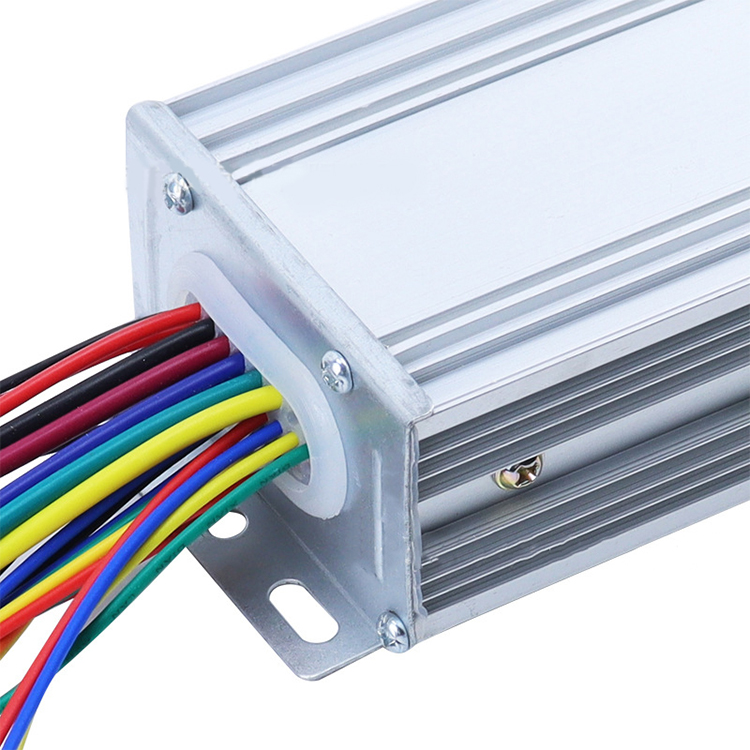
Propulsion Control in Passenger and Commercial Vehicles
The most prominent application of EV controllers is in the road vehicles that are redefining personal and commercial transportation.
1.1. Battery Electric Cars and SUVs
In all-electric passenger vehicles, the motor controller is a central component of the powertrain. When a driver presses the accelerator pedal, the vehicle's main computer sends a signal to the EV controller. The controller then adjusts the power, frequency, and phase of the AC electricity sent to the motor, resulting in smooth acceleration. It also manages regenerative braking; when the driver lifts off the accelerator, the controller reverses its function, using the motor as a generator to convert kinetic energy back into electrical energy, which is then sent back to the battery. This process is managed with precision to ensure driving comfort and energy efficiency.
1.2. Electric Buses and Delivery Vans
For commercial vehicles, the demands on the controller focus on durability, reliability, and low-speed torque. Electric buses in urban transit systems require controllers that can manage frequent stops and starts, providing instant torque for pulling away from bus stops and efficiently recapturing energy during deceleration. Similarly, delivery vans for logistics companies benefit from controllers that offer smooth power delivery for stop-and-go city driving, contributing to reduced operating costs and enhanced vehicle range.
Mobility in Specialized and Utility Contexts
Beyond mainstream road transport, EV controllers enable electrification in numerous specialized domains where performance characteristics like precise low-speed control or quiet operation are valued.
2.1. Electric Forklifts and Industrial Trucks
In warehouses and manufacturing facilities, electric forklifts are standard. Their controllers are programmed to provide precise, low-speed maneuvering and high torque for lifting heavy loads. The ability to operate quietly and without local emissions is a direct benefit of the electric powertrain managed by these specialized controllers, making them suitable for indoor use.
2.2. Golf Carts and Neighborhood Electric Vehicles
These low-speed vehicles rely on relatively simple and cost-effective motor controllers. The controller translates inputs from a simple throttle into the appropriate power delivery for casual transit on golf courses, in gated communities, or within large industrial complexes. The focus is on reliability and smooth operation rather than high performance.
2.3. Electric Drones and Aerial Vehicles
In multi-rotor drones, each propeller is driven by its own electric motor, and each motor is managed by a dedicated, high-response-speed controller known as an Electronic Speed Controller. These controllers receive signals from the flight computer thousands of times per second, making minute adjustments to the power of each motor to maintain stable flight, change direction, or adjust altitude. The precision and rapid response of these controllers are fundamental to drone functionality.
Propulsion for Personal Mobility and Recreational Devices
The technology has also democratized electric propulsion for personal use, creating new categories of transportation and recreation.
3.1. Electric Scooters and Bicycles
The proliferation of e-scooters and e-bikes is made possible by compact, lightweight, and affordable motor controllers. Integrated into the scooter's deck or the bicycle's frame, these controllers manage power from a small battery to a hub motor in one of the wheels. They often include basic user interfaces for selecting assistance levels and display basic information like speed and battery level.
3.2. Electric Motorcycles and Scooters
For higher-performance two-wheeled vehicles, the controller plays a role similar to that in an electric car but on a smaller scale. It manages higher power levels to provide the acceleration and top speed expected from a motorcycle, often with selectable riding modes that adjust the power delivery characteristics for different conditions.
3.3. Personal Watercraft and Marine Applications
The marine industry is increasingly adopting electric propulsion. In electric outboard motors and personal watercraft, marine-grade controllers are used to manage the electric motor. These controllers are designed to withstand a humid, corrosive environment while providing the torque needed for marine propulsion.

 Building 1 and 2, No. 2269, Jingzhong Road, Hongjia Street, Taizhou, Zhejiang, China
  +86-18857621312
  info@zinntu.com

 English
 русский
 عربى
عربى
