
Many people don't think too deeply about vehicle lighting until something goes wrong on the road. A dim tail light, a fogged-up headlamp, or a failed warning lamp can quickly turn into a real safety risk. That's exactly why choosing a reliable vehicle lights manufacturer has become a serious decision for buyers in both domestic and international markets.
For suppliers, distributors, and fleet operators, lighting is no longer just a "component." It's part of the vehicle's safety system, and in many cases, it directly affects compliance, visibility, and driving confidence.
Today, when buyers search online for replacement LEDs, truck work lights, trailer indicators, or off-road lighting kits, they are not just comparing products. They are also trying to figure out which vehicle lights manufacturer can actually deliver stable quality over time.
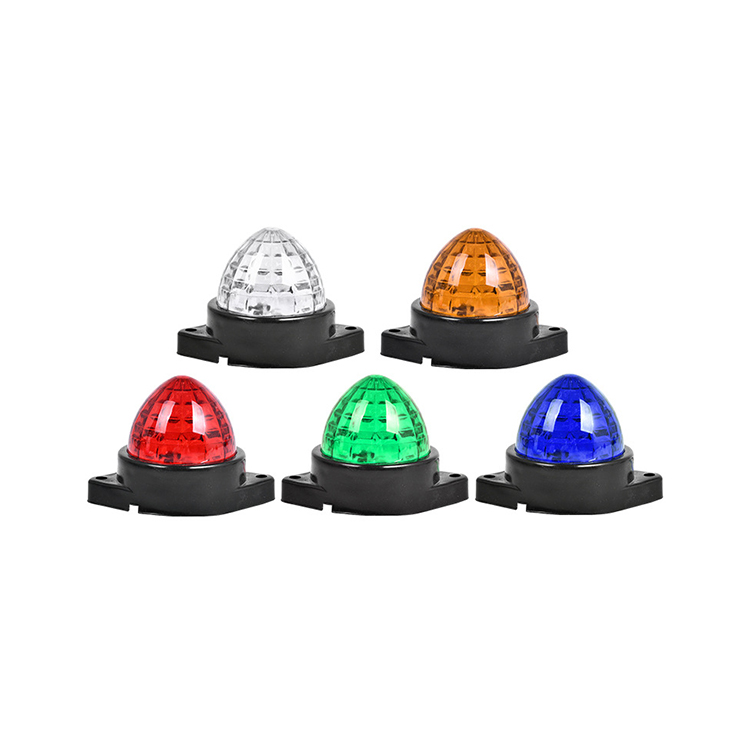
Lab testing can only tell part of the story. Real performance shows up on bumpy roads, during heavy rain, or in long night drives where lighting systems are under constant stress.
A reliable vehicle lights manufacturer usually designs products with these conditions in mind from the beginning, not as an afterthought.
In practice, lighting systems need to survive:
continuous vibration from rough roads
sudden temperature changes from hot to cold climates
long hours of night operation for commercial vehicles
exposure to rain, mud, dust, and salt environments
When these factors are ignored, problems show up quickly—moisture inside the lamp, weak brightness after a few months, or unstable electrical connections.
That's why experienced buyers often stick with a trusted vehicle lights manufacturer instead of switching between unknown suppliers.
For international markets, certification is often the first checkpoint. Without it, even a good-looking product can get stuck at customs or rejected in vehicle inspection.
Different regions have different rules, and a serious vehicle lights manufacturer must understand all of them before mass production.
|
Standard |
Region |
Purpose |
|
E-mark |
Europe |
Road legality compliance |
|
DOT |
United States |
Highway safety approval |
|
SAE |
North America |
Technical lighting performance |
|
CCC |
China |
Mandatory domestic regulation |
A dependable vehicle lights manufacturer pays attention to details that are not always visible at first glance.
These include:
For example, a truck operating long-distance routes at night needs consistent illumination, not just strong light at installation time. This is where manufacturing discipline really matters.
A single lighting design cannot fit every vehicle. The needs of a passenger car are very different from those of a construction truck or an agricultural machine.
A flexible vehicle lights manufacturer usually develops multiple product lines to cover different use cases.
|
Product Type |
Typical Use |
|
LED Headlights |
Passenger cars and SUVs |
|
Tail Lights |
Trucks and trailers |
|
Warning Lights |
Emergency and commercial fleets |
|
Work Lights |
Construction and industrial machinery |
|
Marker Lights |
Heavy transport vehicles |
ZINNTU's production line focuses on covering these segments in a practical way. Instead of offering a single generic solution, the factory supports multiple lighting systems designed for different operating environments.
Not every supplier labeled as a vehicle lights manufacturer actually controls production. Some only trade products from different sources, which often leads to inconsistent quality.
A real factory usually has more control over:
In automotive lighting, after-sales issues can become expensive quickly. A failed lamp doesn't just mean replacement cost—it can also lead to downtime, customer complaints, and reputation risk.
That's why inspection systems matter so much in a vehicle lights manufacturer.
Common quality control steps include:
ZINNTU integrates testing into everyday production flow rather than treating it as a final checkpoint. This helps maintain more stable output quality across different orders.
In real business operations, managing multiple lighting suppliers can become complicated. Different standards, inconsistent lead times, and communication gaps often create unnecessary friction.
That's why many buyers now prefer working with a full-range vehicle lights manufacturer that can support different vehicle categories under one system.
This approach usually brings:
Instead of chasing the lowest unit price, more buyers are focusing on supply stability and product reliability.
The global automotive lighting market continues to expand with logistics growth, infrastructure projects, and off-road applications. But competition is also increasing at the same time.
In this environment, selecting the right vehicle lights manufacturer is less about short-term pricing and more about long-term stability.
At ZINNTU, the focus is not only on producing lighting products but also on supporting consistent supply, practical durability, and real-world application performance. Many buyers value this kind of manufacturing stability more than promotional claims or temporary discounts.
A dependable vehicle lights manufacturer is ultimately the one that performs the same in the third order as it did, without unexpected changes in quality or behavior. That consistency is what keeps long-term cooperation possible in the automotive lighting industry.

 Building 1 and 2, No. 2269, Jingzhong Road, Hongjia Street, Taizhou, Zhejiang, China
  +86-18857621312
  info@zinntu.com

 English
 русский
 عربى
عربى
