
Commercial fleet managers overseeing utility vehicles, golf carts, and light industrial equipment increasingly cite blind spot visibility as a recurring safety concern during equipment audits. An angle rear view mirror designed with adjustable viewing angles has become a common upgrade path for operators trying to reduce collision incidents without redesigning entire vehicle bodies.
Visibility Gaps in Compact Vehicle Design
Utility and recreational vehicles often prioritize compact body design, which frequently limits the rear visibility available to a driver seated close to the vehicle's rear structure. An angle rear view mirror positioned to compensate for this limited sightline gives operators a wider field of view than standard flat mirrors mounted at a fixed angle. Fleet safety officers reviewing incident reports have noted that a disproportionate share of low-speed collisions in warehouse and campus settings trace back to blind spots that adjustable mirror positioning could have addressed.
Convex mirror technology paired with angle adjustment further extends the effective field of view, though buyers sourcing for fleet use need to balance this wider coverage against distance distortion inherent in convex surfaces. Some operators choose a hybrid approach, pairing a flat angle rear view mirror on one side with a convex unit on the other to combine accurate distance judgment with wider peripheral coverage.
Mounting Considerations Across Vehicle Types
Golf carts, utility task vehicles, and light industrial equipment each present different mounting constraints that affect how an angle rear view mirror performs once installed. Vibration from uneven terrain can gradually shift mirror angle over time if the mounting bracket lacks sufficient rigidity, requiring drivers to periodically readjust their mirrors manually. Manufacturers addressing this issue have moved toward reinforced ball joint mounts that hold position more reliably under sustained vibration than simpler friction based designs.
Vehicle mirror manufacturer selection matters particularly for fleet operators standardizing equipment across large vehicle counts, since mounting hardware compatibility varies between suppliers even when mirror specifications appear similar on paper. Buyers replacing mirrors across an existing fleet often prioritize suppliers offering consistent mounting hardware to avoid retrofitting brackets during installation.
Material and Weather Resistance
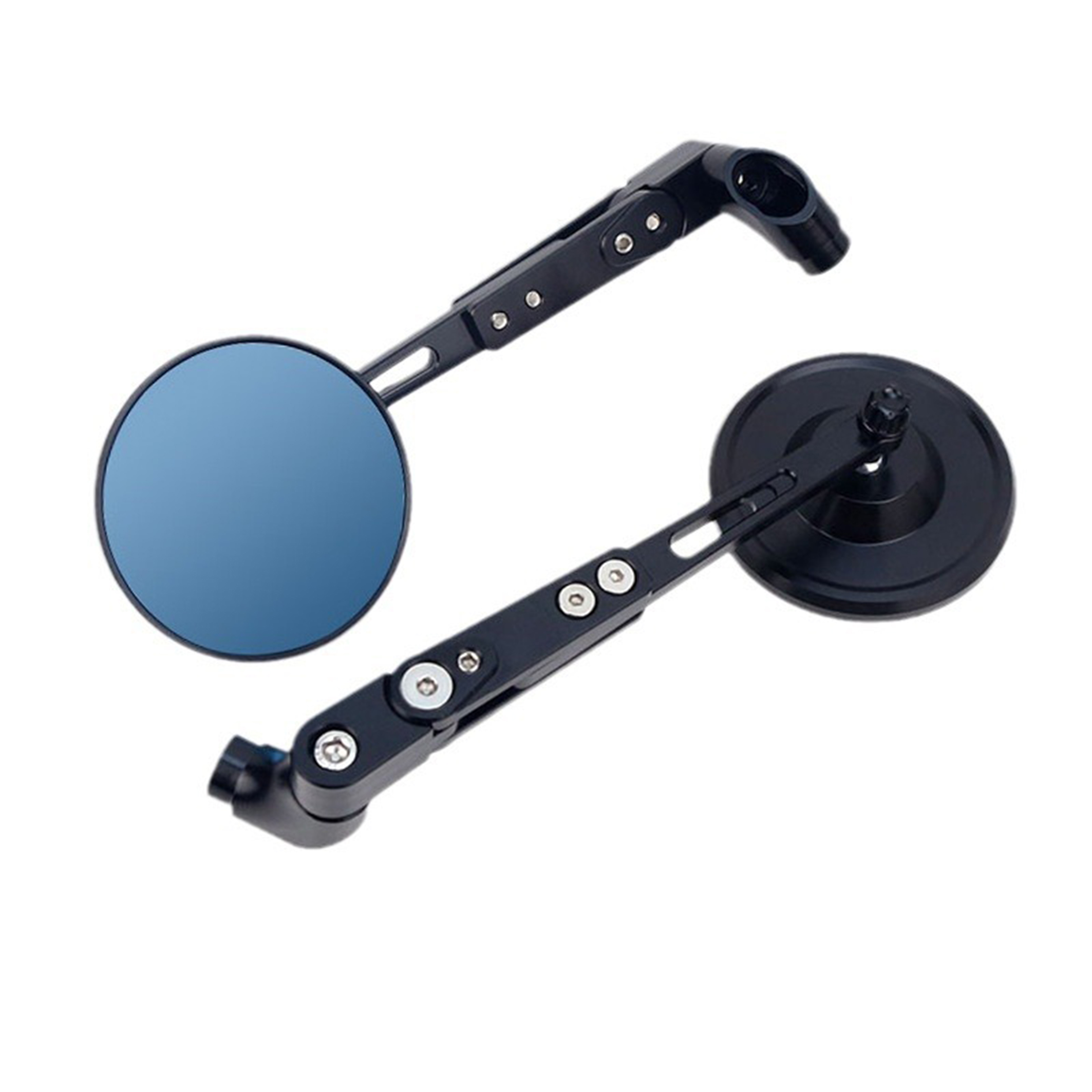
Outdoor equipment exposed to weather requires mirror housing materials that resist corrosion and UV degradation over years of continuous use. An angle rear view mirror built with weather resistant housing maintains adjustment functionality longer than budget alternatives where plastic components can become brittle after extended sun exposure. Fleet buyers sourcing equipment operating in coastal or high humidity regions increasingly specify corrosion-resistant hardware upfront, recognizing that mirror replacement across a large fleet carries meaningful ongoing cost if components fail prematurely.
Glass quality also affects long term performance, since lower grade mirror surfaces can develop cloudiness or edge degradation faster than properly sealed alternatives. Buyers comparing supplier quotes sometimes overlook this detail in favor of unit price alone, only to find replacement rates climbing within a few years of fleet deployment.
Regulatory and Safety Compliance
Certain vehicle categories carry minimum mirror coverage requirements depending on regional transportation regulations, and fleet operators need to confirm that any angle rear view mirror installation meets applicable visibility standards for the vehicle's operating environment. Compliance documentation matters particularly for operators running mixed fleets across multiple jurisdictions, where mirror requirements can vary meaningfully between regions.
Safety officers conducting equipment audits increasingly treat mirror adjustability as a checklist item alongside more traditional safety features, reflecting broader awareness that visibility improvements often prevent incidents more effectively than reactive safety measures implemented after a collision.
Sourcing for Fleet Scale Deployment
Manufacturers supplying fleet operators report growing demand for mirrors compatible across multiple vehicle models within a single product line, since standardizing components simplifies both procurement and maintenance training. Buyers negotiating bulk orders for an angle rear view mirror typically request consistent adjustment mechanisms across all units purchased, reducing the training burden on maintenance staff who service mixed vehicle fleets.
As utility vehicle fleets continue expanding across warehouse, campus, and light industrial settings, visibility hardware upgrades are increasingly treated as a standard safety investment rather than an optional aftermarket accessory.




 Building 1 and 2, No. 2269, Jingzhong Road, Hongjia Street, Taizhou, Zhejiang, China
  +86-18857621312
  info@zinntu.com

 English
 русский
 عربى
عربى
